

Chapters: Erin Pollard
Discover life chapters and slow stories from the founder of Underwater Weaving Studio.


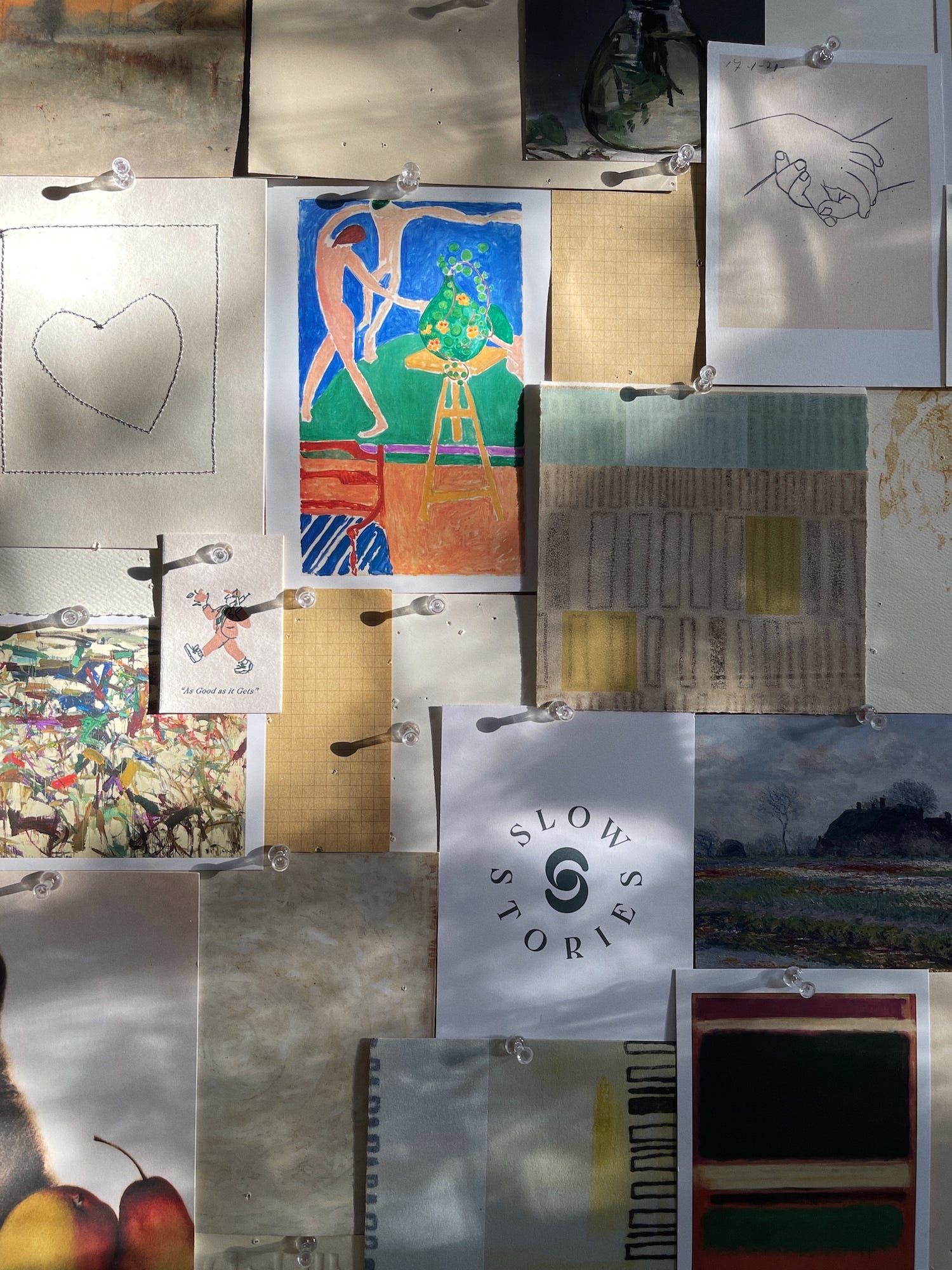
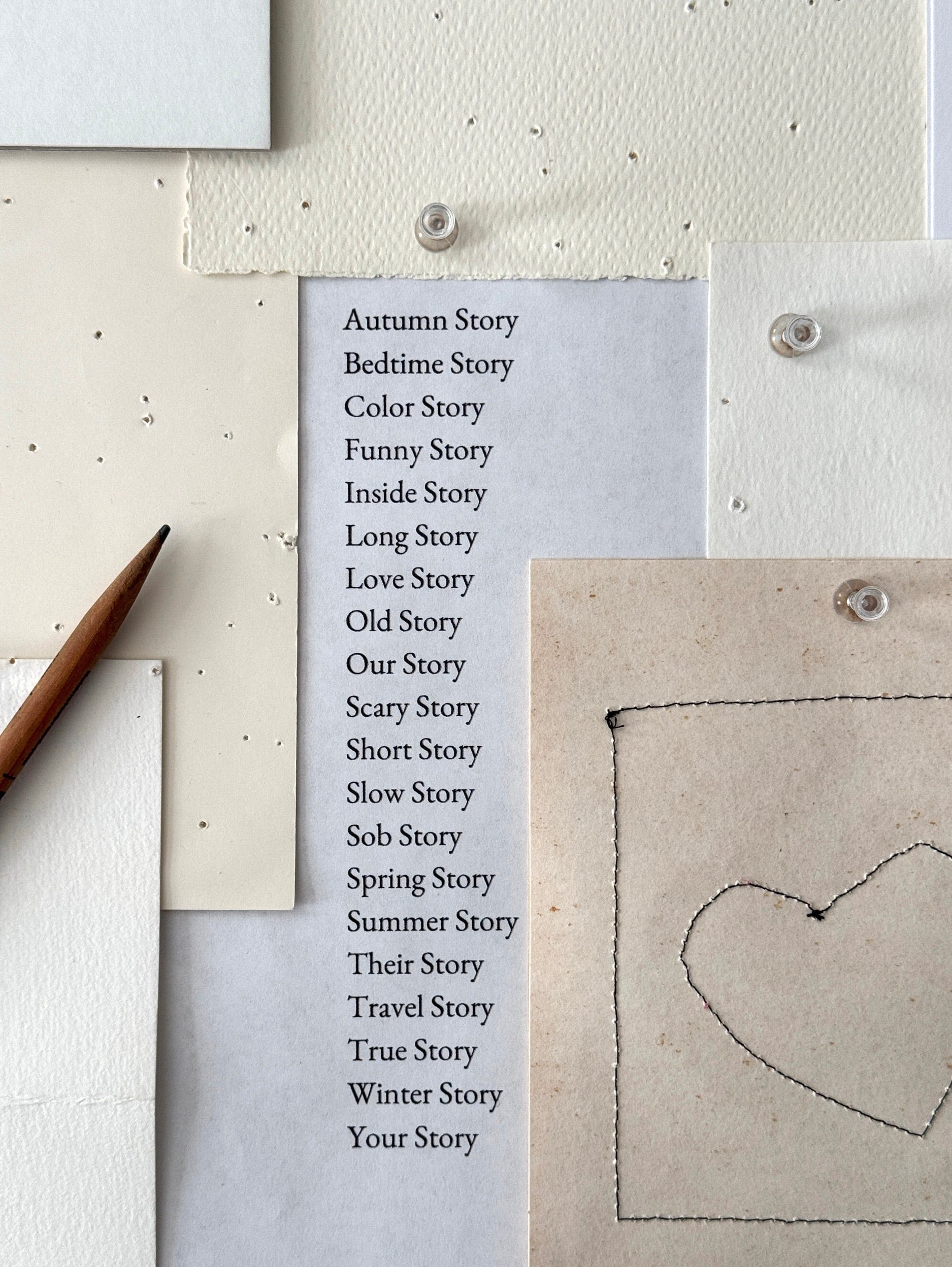
Every (life) chapter has at least one memorable moment, sentence, or story. What are yours? In Chapters, I ask creative people to reflect on the stories of their lives and respond to any of the below prompts (in whatever way they wish).
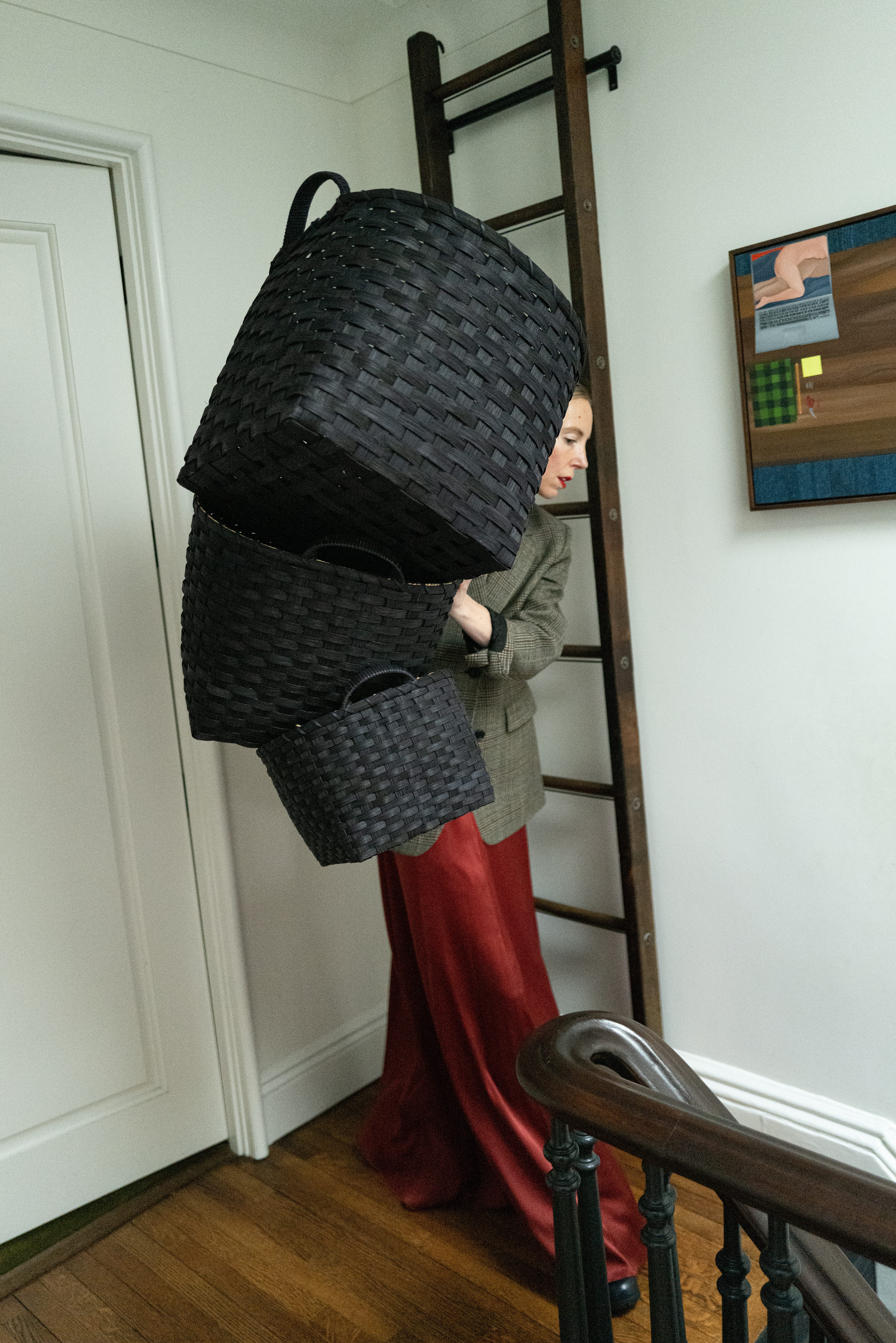
In the latest installment, we hear from Erin Pollard—founder of Underwater Weaving and creator of Baskets for Breakfast—who shares familial history, artful musings, and a reverence for the past.
Slow Story
Preserving Stillness
I grew up in Maine. I arrived in the early ‘80s and experienced the world in a tight-knit community, inland, defined by hard work and making things from scratch. I was raised in a sort of bustling orbit of entrepreneurialism through my family’s established diner (it opened in 1952) and my mother’s craft practice. I learned early on the inherent value of lineage, labor, and taking the time to make something real. I threw myself into the dance lessons. I was a “hard worker.” In retrospect, I never stopped moving, but times were different. Quieter… slower still.
I was lucky enough to witness a golden era of Maine craftsmanship firsthand. I watched my mother cultivate a small collective of weavers and make a basket tote for L.L.Bean. She taught workshops in our basement. We attended craft fairs and collected Americana. Her friends gathered to make things. Using our hands was a common language. But over time, I also watched the cultural shift away from those tactile traditions, replaced by that sound of dial-up, the car phone, MTV!
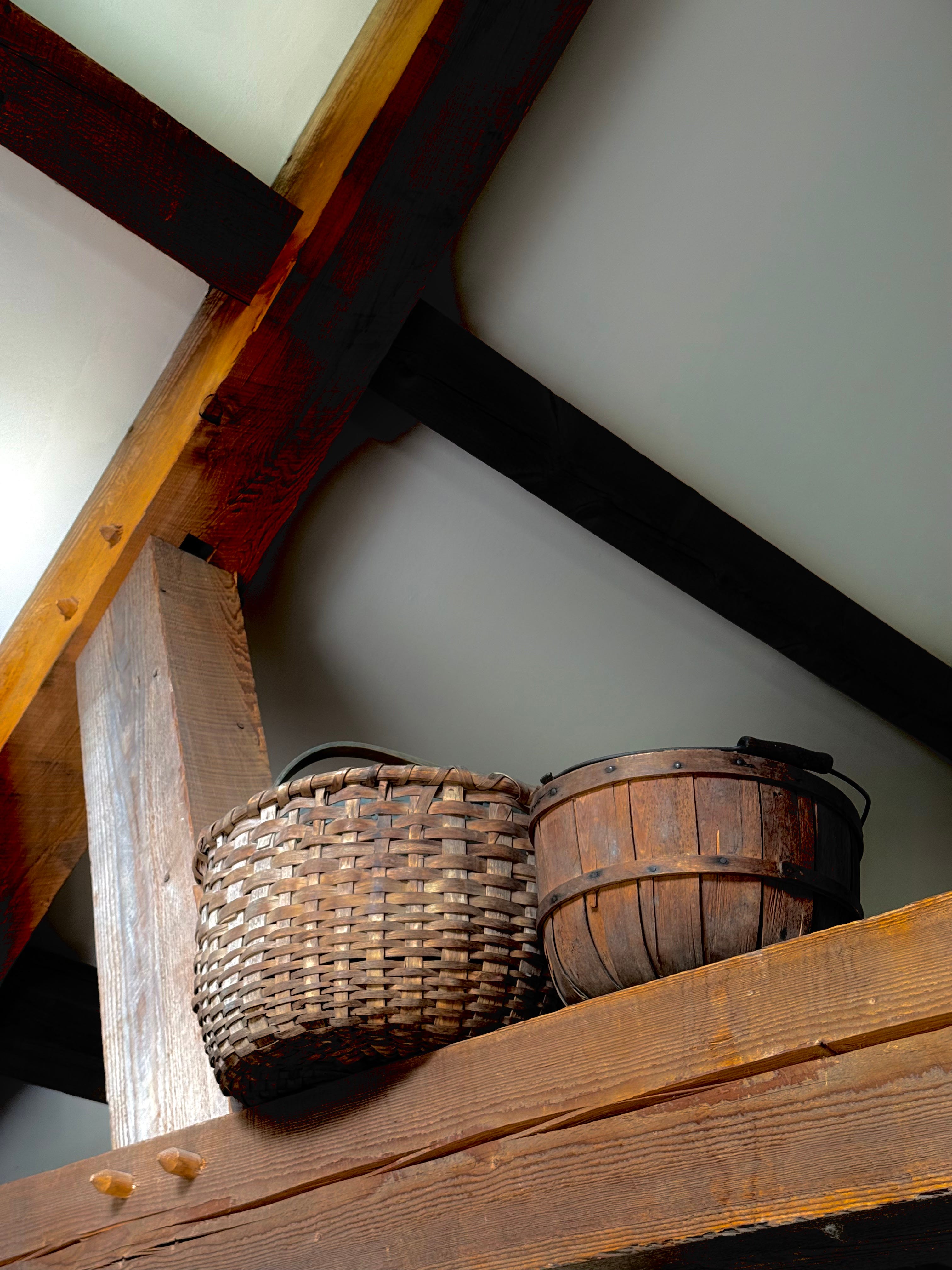
Through my weaving, writing and work at the studio, I think that’s what I’m working to preserve most: the slowness I recall from childhood; exploring the tension between modern “progress” and heritage preservation.
People often ask about the name of the studio. “Underwater Weaving” takes its title from the literal, necessary process of soaking natural materials to make them supple enough to shape. It’s also a nod to the cultural idiom so often used to dismiss domestic labor, women’s work, and vocational learning. How appropriate that men would find feminine nurturing so threatening to discard it as useless. Underwater Basket Weaving became shorthand for “not smart.” I chose to embrace the phrase to turn a joke into a statement. I believe deeply that softness, slowness, and beauty are sources of immense power. I feel liberation in my choice to gather, make, nurture, and give.


If I’m doing it right, the work becomes a constant dialogue with the past. I’m in a constant battle with convenience. We’ve made everything so easy. I try to draw on Maine’s Wabanaki and Shaker legacies and my mother’s practice, but I can’t help but filter those histories through a contemporary lens shaped by my own background and lived experiences because it’s what I know.
Sob Story
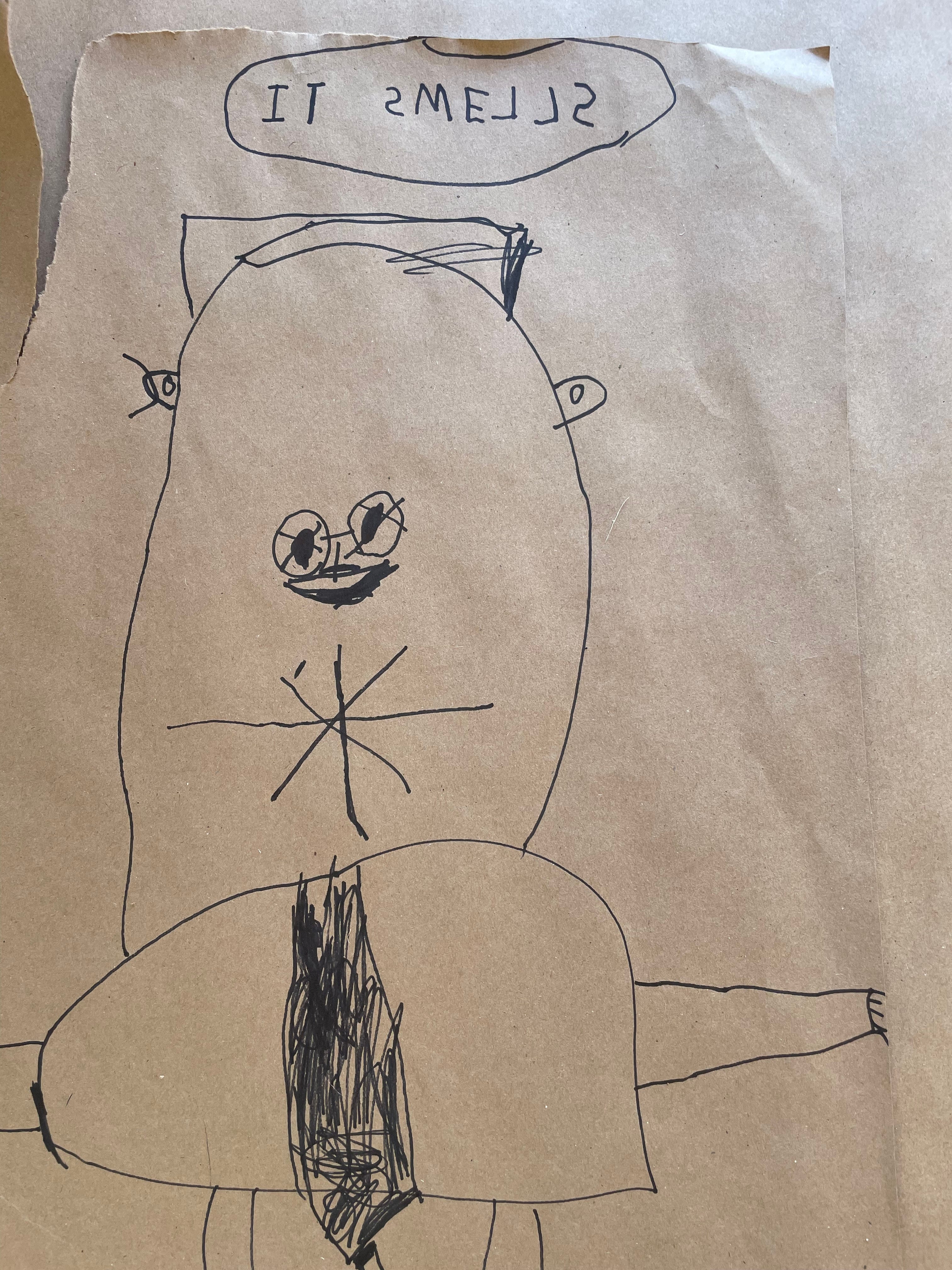
“Cry” written by my son, August, when he was six years old
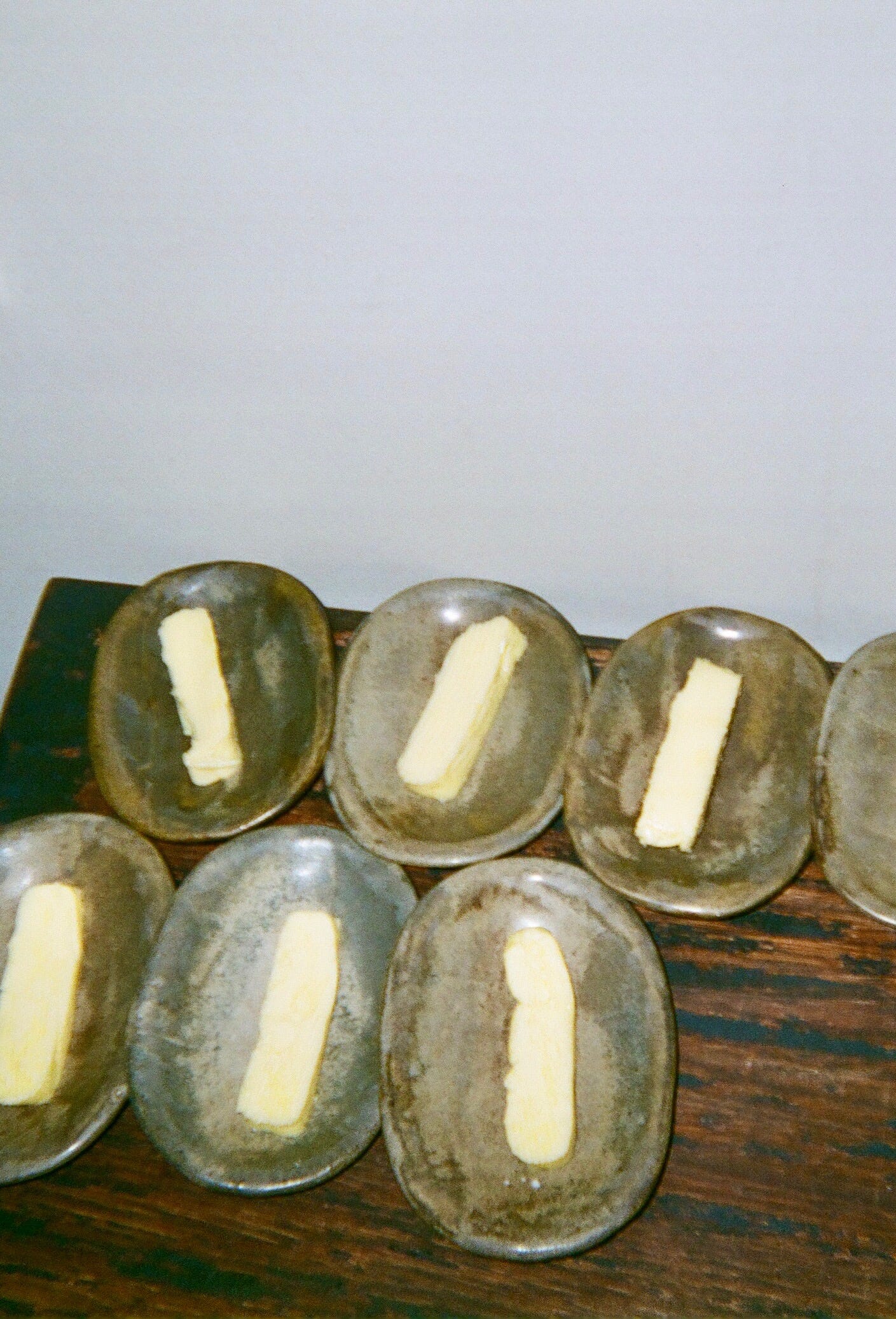
Once, there was an onion named Cry. Cry went to school with his friend Butter. Everyone called him Butterscotch because he’s good at “hot-scotch!” Cry and Butterscotch had a playdate, and they peeled back and chilled in the fridge. Then, Cry went to the barber to shed his onion skin and his house at (!!!) Pot Avenue! When he went to bed... it was on a plate. He got eaten!!!!! His friend melted with tears. The end.


Short Story
An passage from Ursula K. Le Guin’s The Carrier Bag Theory of Fiction
“If it is a human thing to do to put something you want, because it’s useful, edible, or beautiful, into a bag, or a basket, or a bit of rolled bark or leaf, or a net woven of your own hair, or what have you, and then take it home with you, home being another, larger kind of pouch or bag, a container for people, and then later on you take it out and eat it or share it or store it up for winter in a solider container or put it in the medicine bundle or the shrine or on the museum shelf, the holy place, the area that contains what is sacred, and then next day you probably do much the same again—if to do that is human, if that’s what it takes, then I am a human being after all. Fully, freely, gladly, for the first time.”
Their Story
An excerpt from my post, “The Basket as Hero: The quest for kind history”
I recently saw The Testament of Ann Lee, directed by Mona Fastvold.
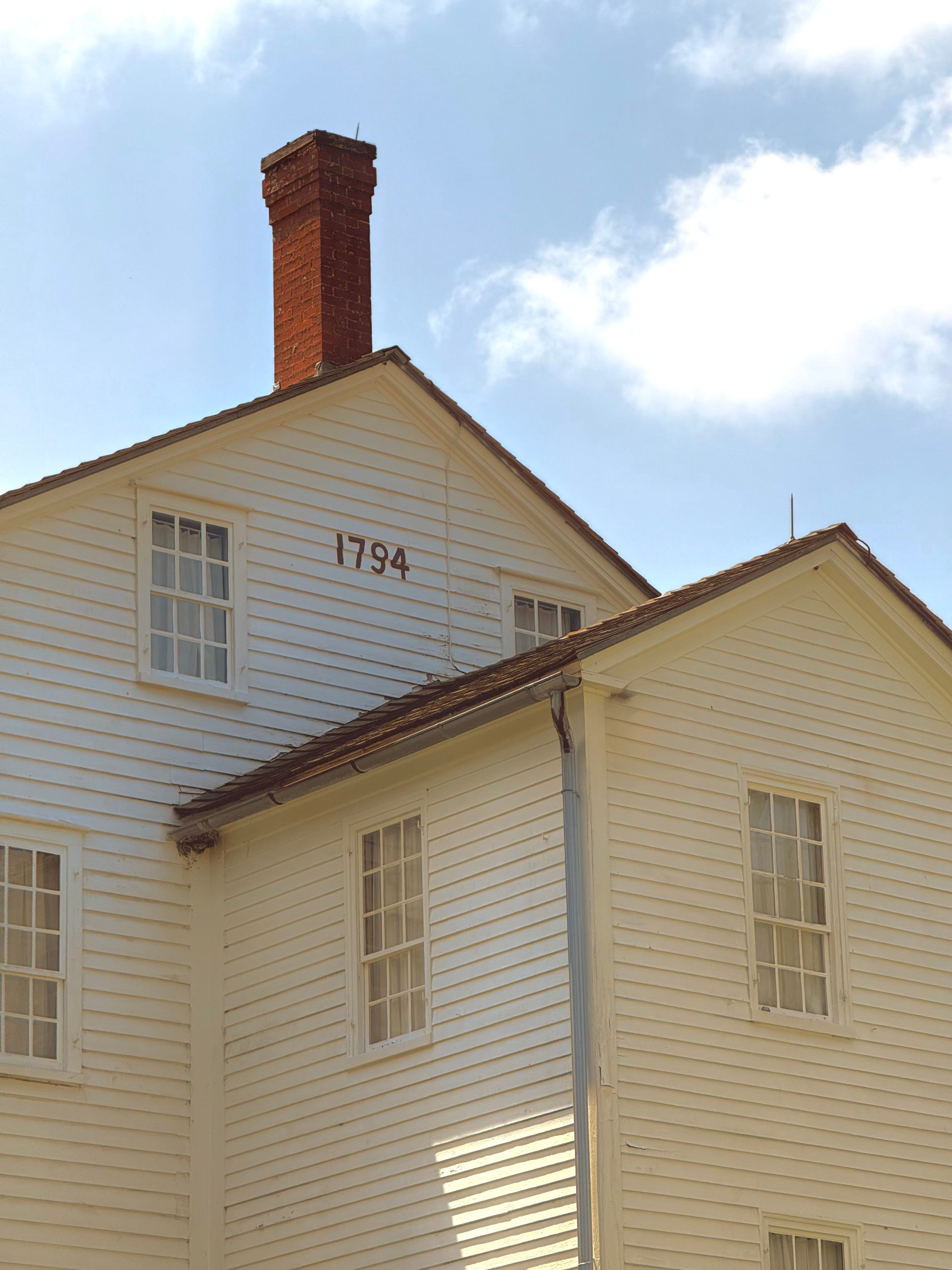
As it pertains to our work at the studio, I am a fan of the Shaker aesthetic and was excited to see the film for this reason, as well as to learn about Ann Lee, whom I simply thought to be an early feminist. Because our studio in Maine is part farmhouse and barn built in 1789—just 10 minutes from The Sabbathday Lake Shaker Village, established in the same decade—the style’s influence on our work has been a consistent presence.
The Testament of Ann Lee is an otherworldly genre-bending film about a woman who rejected a patriarchal society, believed in utopia, and brought a movement to America that celebrated dance, song, and the creation of useful things in the late 18th century. Through beautiful, dramatic postmodern choreography by Celia Rowlson-Hall and melodic reinterpretations of Shaker hymns by Daniel Blumberg, the film depicts work as nothing short of ecstasy, reached through washing, gardening, weaving, building, making, and craft.
Of course, I left longing for a craft and community-led daily life. Bond, substance, and discovery through the work of our hands? I’m in. I openly suspect the disintegration of these skills over the centuries has left us disconnected from the world and ourselves. But seeing the film also hit another nerve I’ve been trying to name. I find myself desperate for “good” stories about our history.
So many of the stories of our past are heavy. Patriarchal—timelines of conquest and division. I carry the weight of these stories in daily interactions. I think we’re feeling the negative effects of these stories on our culture. I long to find narratives where we were gentler. I’m on a desperate search for a kinder story.
While I don’t subscribe to a particular religion, Ann Lee and the Shakers have some redeeming qualities. It’s easy to be drawn in by their chairs and baskets, but perhaps it is possible to feel okay with the intention behind them.
The era when the Shakers arrived in America was defined by slavery and hierarchy, yet they were inclusive. They opened their doors to everyone—Indigenous, Black, white, orphans, and the destitute—declaring them equal. Ann Lee also equalized women. It’s worth noting that at the time, childbirth was the leading cause of death, and she had lost four children before the age of one (it’s horrifically shown in the film). It is not out of the realm of possibility that celibacy was a form of gender preservation. That said, the film implies that Mother Ann considered herself the female version of God, but according to practicing Shaker Brother Arnold, she saw herself as a disciple, not the female version of Him, which feels a bit more digestible.
So, while others were writing pamphlets about equality, Ann Lee practiced a world where women were actually equal. If I am to be in a constant dialogue between the past and the present, this is chat I’m receptive to.
Perhaps the most comforting part is the living connection to this history through our local village. It’s bucolic landscape intact, the sheep, gardens, structures, and humans living and working there. It’s a real place I can visit.
I guess these are the themes that tether me now. The idea that maybe when we weave, we are doing more than making an object; that maybe we can participate and preserve a lineage of kind history. We can use our hands to create something that holds, gathers, and generously offers. Objects with a kind soul.
Love Story
Craft Pair
If you were around in the ‘80s and ‘90s, you likely recall a distinct, Americana-infused interiors aesthetic. A cozy, “country” look marked by a palette of mauve, dusty blue, forest green, and burgundy. This was the era of rustic, stenciled motifs, decorative wooden cut-outs, quilted pillows, wholesome repeating wallpaper, baskets, and dried floral wreaths. The aesthetic was a stark contrast to the minimalism of Mid-Century Modern design and its rise was, in retrospect, fueled by the 1976 Bicentennial.
As a child, my portal to craft was the annual Cumberland Craft Fair. Every August, my family would spend a week there, immersed in a world of artisans making things with this exact country aesthetic. Although the Cumberland Fairgrounds had been operating since 1870, the craft fair, started by the United Maine Craftsmen in 1969, was perfectly positioned for the Folk Art revival and the newfound appetite for handmade Americana.
One might expect my time there was driven by my mom’s basket making, but she never entered the Cumberland Craft Fair.
As diehard entrepreneurs, my parents always sought the most lucrative opportunities, and a basket stall wasn’t the leading idea—a lobster roll booth was. My parents had taken over Cole Farms, a family-owned diner established in 1952, and they brought its reputation for simple, home-style food to the fairgrounds. In a sea of hot, battered, and fried options, our booth stood out, and it turned out to be a great idea. Long lines formed as early as 11 a.m. for fresh Maine lobster and crabmeat rolls, chef’s salads, and coleslaw made with my dad’s grocery store-distributed dressing.
The Cole Farms booth also pioneered a food delivery service for the vendors, with the kids taking charge. As early as ages seven and eight, my siblings, cousins, and I became food runners for the vendors. We’d roam the sheep stalls and exhibition tents, singing songs and taking orders. As a family of pragmatists, our success measured in rolls sold. I admired the artisans. I understood our own family’s approach to survival and opportunity, and with my hard-earned cash, I bought their homemade fudge, handmade dolls, and handmade hats.
One of my favorite booths offered snacks. The booth was Mother’s Mountain Mustard, founded in 1982 by Carol Tanner and Dennis Proctor. They started in their small home kitchen in Falmouth, Maine. Carol began making mustard for friends and family using a recipe from her mother. Encouraged by the response, Carol and Dennis turned the recipe into a business. During this time, they were a big part of the artisan food movement, attending the Maine Fair circuit.
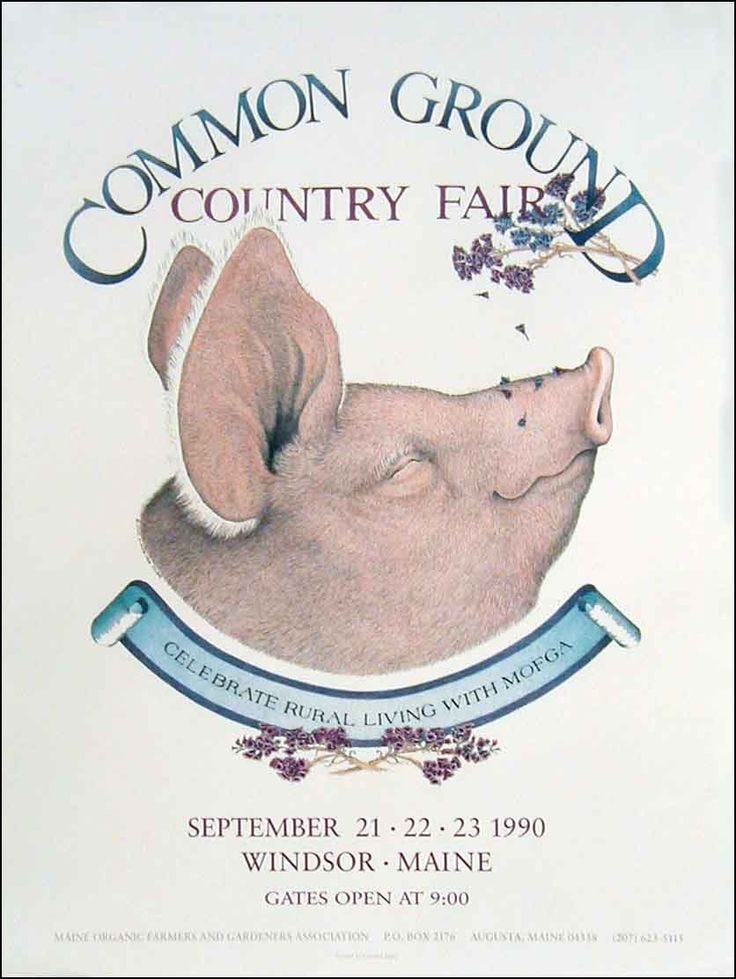
That circuit also included the Common Ground Fair, which I vividly recall visiting in 1990 with my best friend and her family. If Cumberland was a bustling, stencil trend-driven marketplace, Common Ground felt like a utopian world. First held in 1977, it was a true “harvest celebration” that championed organic living and handcraft, a direct counterpoint to commercial fairs. It hummed with a different energy—not just of commerce, but of mission! We danced to bluegrass music, jumped from pen to pen to see the heritage-breed animals, and ate delicious, homemade food.
They say history repeats itself, and it seems the ethos of “Maine-made” and this country aesthetic is seeing a resurgence. Is it America’s upcoming birthday? A new wave of nostalgia, driven by a generation that recalls visiting country fairs, waiting for things, mauve, and a life pre-internet, suggests that the desire for a slower, community-centered life is upon us. That friend who’s moving to Maine? They, and so many others, are the beneficiaries of a culture built by Maine folks like Carol and Dennis. With the infrastructure of farmers’ markets and craft guilds now firmly in place, the new guard can arrive with the same back-to-the-land mentality. Still, with a modern advantage: they can spend their morning in the garden, weaving, stenciling, or painting, and freshen up for a 12 o’clock Zoom meeting.
The Cumberland Craft Fair, did not maintain its magic. But the Common Ground Fair, like many others rooted in mission, now draws over 60,000 visitors a year, having transformed into a major Maine event. It stands as a testament to its founders’ vision, proving that a fair can be a powerful force for change. And it’s why fairs across Maine are experiencing a resurgence—no longer a necessity for commerce, they have become an intentional act of rebellion against the digital world we’ve created.
This year at 93, Carol entered the annual tee-shirt art contest to promote the Common Ground Fair. They are still very much a part of the world they helped to build.
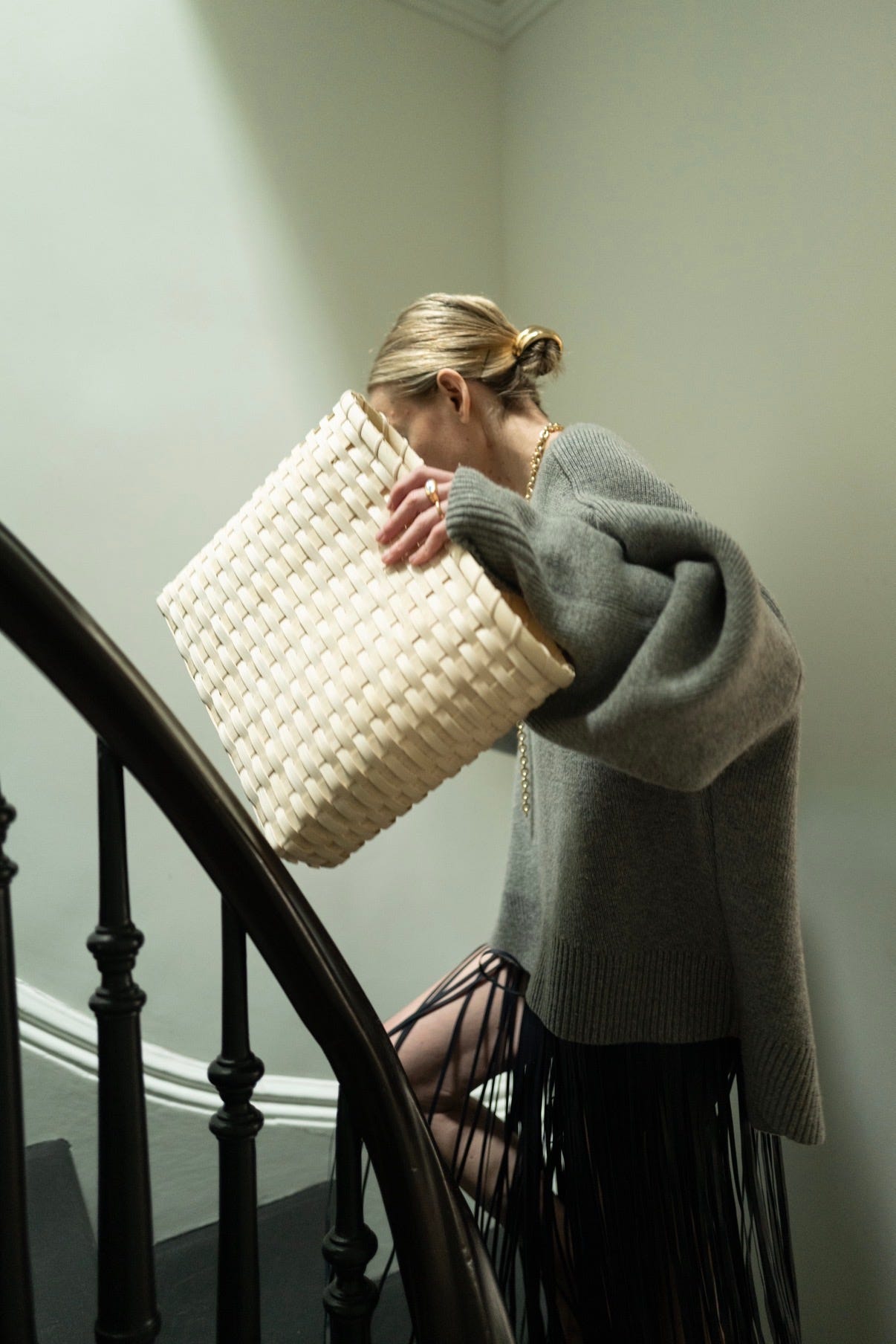
Thank you, Erin!
All other photos courtesy of Erin Pollard unless credited otherwise.

 | A guest post by
|
Thank you for sharing these Rachel ❤️ I love being a part of this