

Lauren Sands
Discover life chapters and slow stories from the founder of LES Collection.


Every (life) chapter has at least one memorable moment, sentence, or story. What are yours? In Chapters, I ask creative people to reflect on the stories of their lives and respond to any of the below prompts (in whatever way they wish).
In the latest installment, we hear from Lauren Sands—founder of LES Collection and creator of A Whimsical World—who shares literary recommendations, daily delights, and familial reflections.

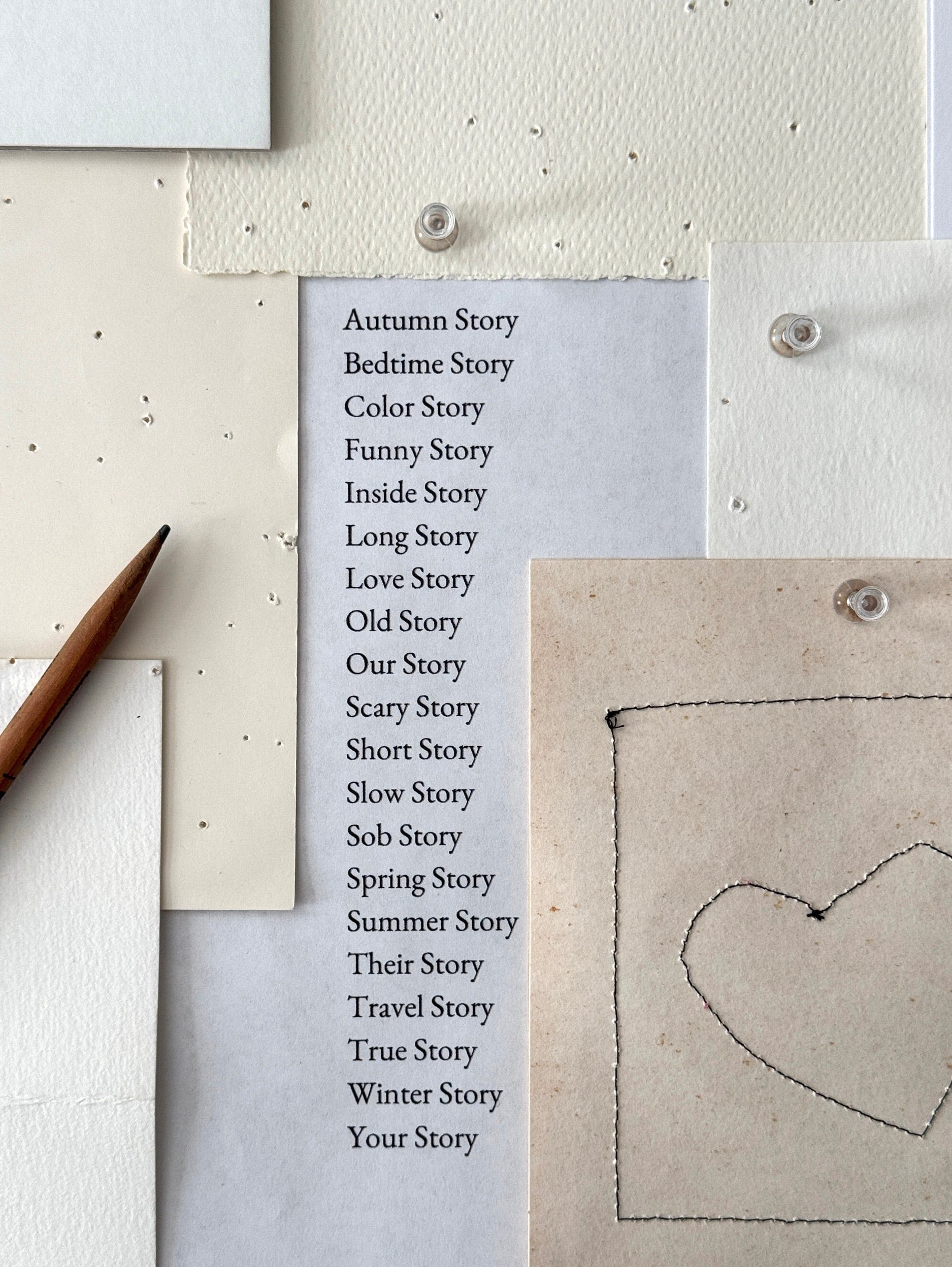
Slow Story
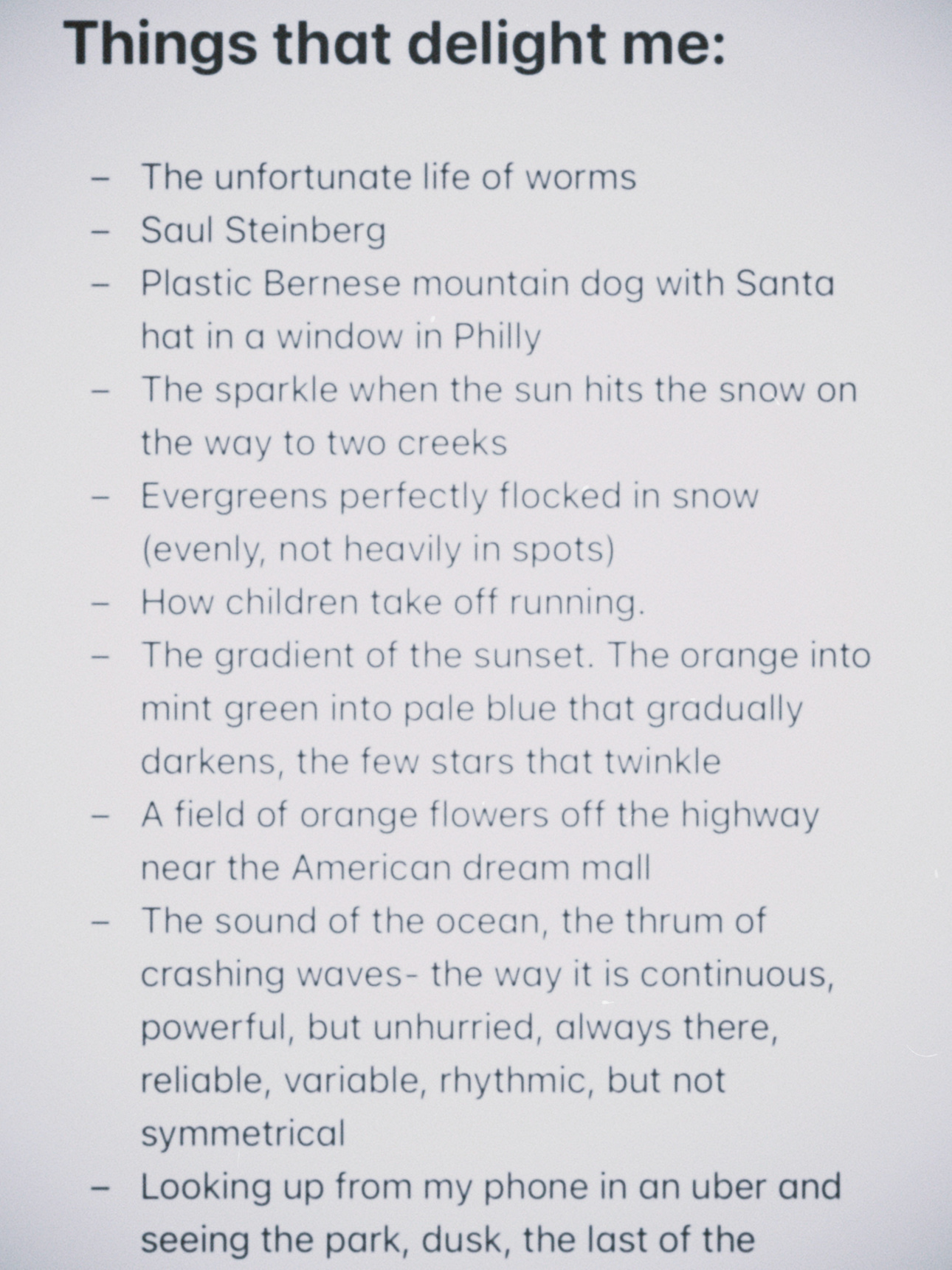
All the delights of life—when you slow down and pay attention. I keep a list:
Short Story
What would happen to a person if they were planted in rich, well-fertilized soil? In a vegetable patch showered by the sun’s generosity and radiance? This is the premise of “Plants, Stones, Dirt, and Sky” by Yan Lianke, translated from Chinese by Jeremy Tiang. In this delightful short story, the narrator, Grandpa Liu, asks questions about life. Obvious questions, but those that most people don’t ask. Questions that arrive when you slow down, when you have lived life without spending it distracted. Questions like, “How come every flower has its own fragrance, but the grit and pebbles on the street smell of nothing?” There is a patient, stubborn curiosity at the heart of the narrative.
It’s also a powerful love story—one built on shared time, routine, and a stubborn refusal to imagine life without each other. It’s unsentimental and practical, and deeply moving because of that restraint. This story made me feel good about life, love, and even death. It’s one I will pick up again and again—when I need a reminder to slow down, ask questions, to appreciate my partner, and to not take life so seriously.


Inside Story
I was around eight months pregnant with my second child when the pandemic struck. I was gripped with anxiety. Questions like What would it look like to give birth into a world plunged in illness? and What would that mean for this new life? churned relentlessly in my mind. I started painting as a way to quiet the noise.
As I embarked on a series for my son’s nursery, I documented the creative process on social media (the birth of @les.collection). To my surprise, it quickly gained traction, and I found myself enveloped in the warmth of new creative friendships. This community was a constant source of joy amid the shadows.
What began as a remedy for anxiety blossomed into an unforeseen romance with artistic expression. I found boundless energy in discovering and sharing the stories of artists who inspired me. Collecting became a celebration of community and story. From this, the vision for LES Collection emerged. A place where I could curate and design strange, serious, and whimsical objects, and a platform to share the stories of the very cool artists and creatives I met along the way.


Color Story
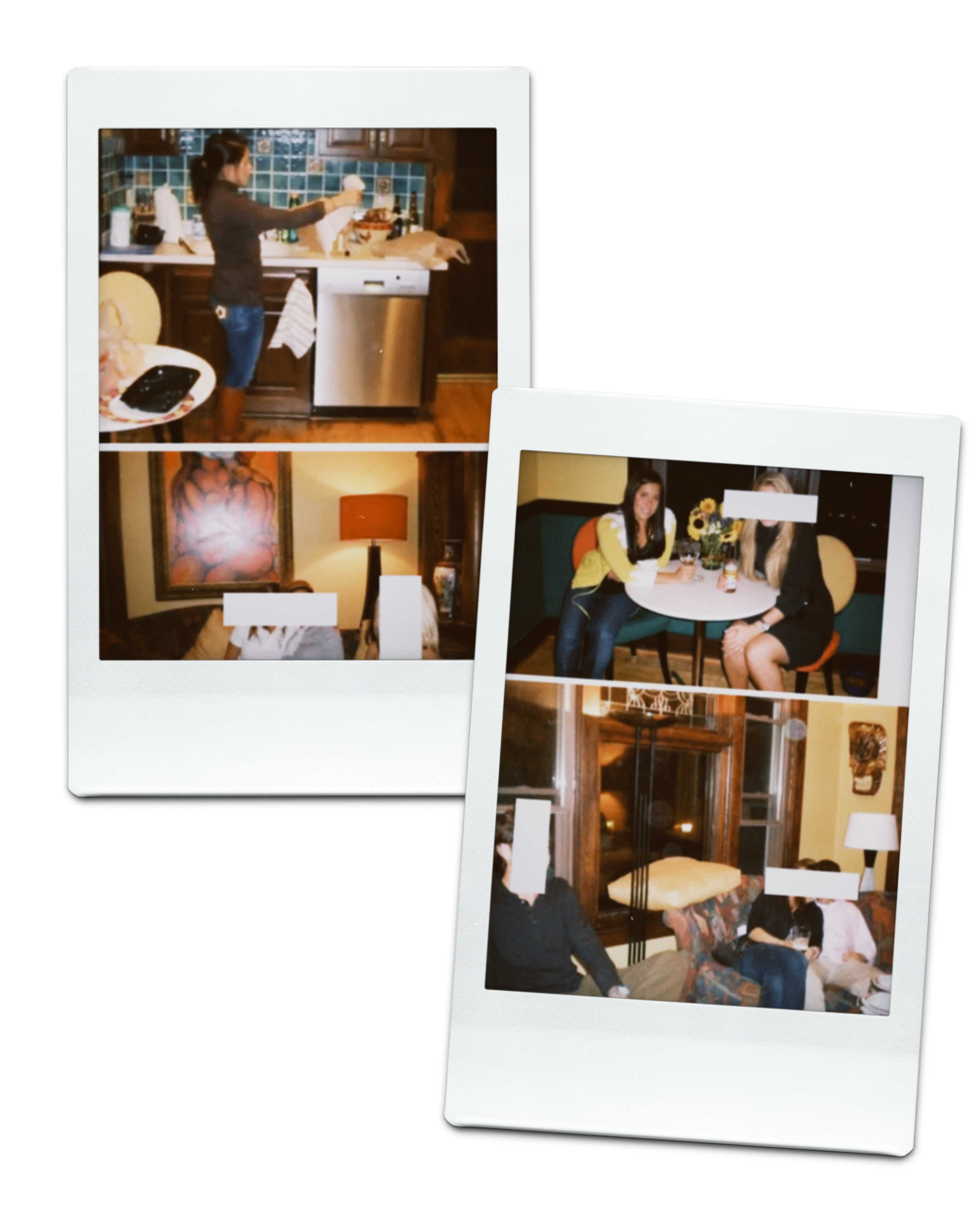
My introduction to design began with swaths of color. My first apartment was the second floor of a late 19th-century Tudor in my hometown in Western New York. The living room was painted mustard yellow, the dining room was a rich ruby red, and the office and bedroom were cornflower blue. The kitchen had teal tile, amber walls with a thick black line, and rich walnut cabinets.
I was in college, and painting was out of the question; I didn’t even consider it. Nor did I yearn for white walls. Of course, I would live in this kaleidoscope of color. I filled each vibrant room with hand-me-downs from my parents and vintage finds from a dusty local warehouse—a jumble of periods, textures, and tones. Each piece had character. There was not a sliver of beige in sight.
I often think about that apartment. I only lived there for a year, from 2007 to 2008—pre-Instagram, pre-Pinterest. Finding photos is challenging, but thanks to some friends and a party I definitely don’t remember, I have a few. When I moved out, I left color behind. My next apartments got progressively grayer. My own flattening of style mirrored a larger shift: a creeping sameness that swept through design, turning everything beige and boucle in its wake. Homes began to look like pale reflections of personality. I got swept up in that downward spiral for a time, but lately I have been trying to claw my way back to color. I wrote more about the flattening of design here.
Scary Story
I slid onto my board, ribs bruised and burning, and started paddling across the river. The water was thick and warm, and I dug my arms in hard, pushing my lungs, adrenaline already high. My muscles ached as they warmed up, still sore from the days before. I told myself I wasn’t afraid of the crocodiles—but I also wasn’t not afraid. The threat was there, lurking, pushing me forward. The waves on the other side of the river were worth it.
It’s hard to explain the reasons I love to surf. Part of it is the focus, the incredible attention it requires. Out there, everything narrows to the essentials: paddle, breath, timing. As I sit on my board and watch the horizon, I am fully present. Totally engrossed in the act of reading the water. Waiting for that subtle telltale sign of a wave rising in the distance, building as it approaches, ready to join with the momentum of my paddle and carry me forward.

Fear is part of it, too. Essential to the joy in a way I’ve never fully been able to articulate, even to myself. The ocean is a massive, powerful force—one that demands respect, fear, and awe. It can be relentless. A wall of water strong enough to hold you under, to push you back toward shore again and again. But when that same force lines up just right, when I catch that wave, turn and descend down its slope, it feels like the universe is shining its light directly on me. It feels like magic.
Fear is a vital part of life. Surfing is one of the few places where I meet it head-on, in a way that feels honest and open. I bring my skill, my understanding of the ocean and its patterns, and I push just beyond where I’m comfortable—not recklessly, but deliberately, with respect. Fear is my trusted ally, keeping me aware, sharp, present, lending me strength.
“Hanging, saying, pulsing, the most vulnerable and insubstantial creature, it has for its defense the violence and power of the whole ocean, to which it has entrusted its being, its going, its will.” - Ursula K. La Guin, The Lathe of Heaven
On a somewhat unrelated note, I got really into Gothic literature this past fall. Reading stories where fear is a character, constantly present. Some of my favorites are: We Have Always Lived in the Castle by Shirley Jackson, Rebecca by Daphne Du Maurier, The Monk by Matthew Lewis, and Fledgling by Octavia Butler.
Bedtime Story
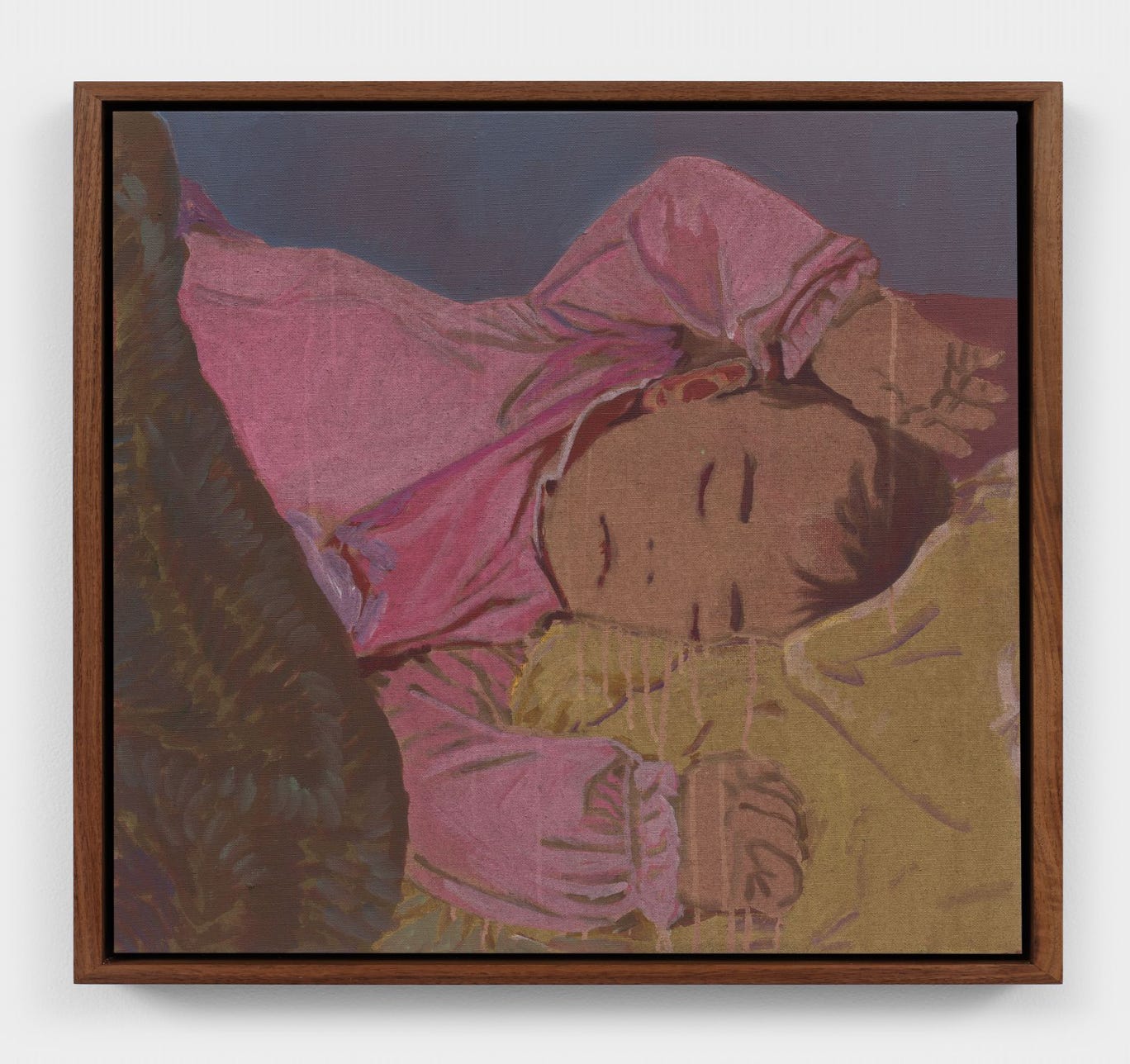
I wrote this about a year ago and never did anything with it. It just sat in my Google Docs. At the time, I thought I might write an essay about the experience of motherhood, but I didn’t. Instead, I worked through my feelings privately, in therapy, and with my husband. I revisited the doc recently and decided to include the first few paragraphs here:
Have you ever experienced a gratitude so large it’s crushing? The kind that threatens to overwhelm and completely consume you?
I lay in my daughter’s bed with a book on my chest. It was bedtime, and she had run out of her room to see what her brother was screaming about. I picked up her stuffed bunny, rubbing my thumb over the coarse material worn down from years of her love, when it hit me: the image of myself picking up that bunny with my daughter dead, my grief all-consuming. I imagined myself clinging to it as I cried uncontrollably. How it would be all that was left and never enough. I spiraled deeper into the story, convincing myself I would never recover from that kind of loss.
I took a deep breath and repeated a mantra a therapist had given me as a way to think about my anxiety: “That’s Cheetos. Put it on the shelf.” I pictured placing the thought on a pantry shelf, in the back, and out of sight. I focused on how grateful I am for my two delightful children, my supportive husband, my big, wonderful life. It helped... sort of.
She came back in, dancing around. We laughed together, and I began reading again. I forced myself to focus my full attention on the mythical world of Percy Jackson and the feeling of her warm body lying next to mine.
Later, my husband and I switched, and I went into my son’s room. It was dark, so I felt around the bed for his feet, but instead, my hand landed on his face. He burst into uncontrollable laughter—that laughter that lights up my world. I crawled into bed, holding him in my arms as his laughter turned into yawns and deep breaths. I rubbed his warm, clammy hand and listened to his heartbeat and the rhythmic waves of his sound machine. My own heart started to slow, my anxiety melting little by little, but that tight ball in my chest—the one that makes it hard to get enough air into my lungs—didn’t quite disappear.
Lately, my gratitude has become tinged with something more sinister, lurking just under the surface. Its opposite. Loss. Grief. A life not worth living. These are the thoughts that haunt me.
For beautiful writing on motherhood I recommend Nicole Lipson’s Mothers and Other Fictional Characters. Lipson’s portrayal of motherhood is incredibly intense because being a mother is intense. Lipson sees that. She sees how it breaks and builds you at the same time. She captures that impossible feeling of mourning a childless past while being swallowed whole by a love so enormous, so cellular, it makes you dizzy with gratitude and fear.
Summer Story
I inherited my very first plant last February. I say inherited because the plant, a lemon tree, was a Valentine’s Day gift from my mother to my four-year-old son. As any parent can imagine, he became immediately attached with a burning intensity that only kids have with inanimate objects. The lemon tree was now part of his posse, right up there with his blanket and beloved stuffies. Keeping this lemon tree alive became a parenting imperative.
At the time, my thumb was the color of skin, never having the opportunity to take on the ubiquitous green or black shades associated with one’s ability to keep plants alive. I had no idea what to do with this little lemon tree, but I was determined to figure it out. The truth is, I had been dreaming of gardening and the dream felt urgent. Like something that would transform me from the person I was to the person I wanted to be.
This craving to garden seemed to come out of nowhere, but it also made sense. It was wrapped up in my love for design, for home, for the act of gathering friends and family around a table. It soothed my constant need for a new challenge, something to learn. It fit within my daydreams of a slower, analog life, one that is more connected to nature and less connected to my devices.
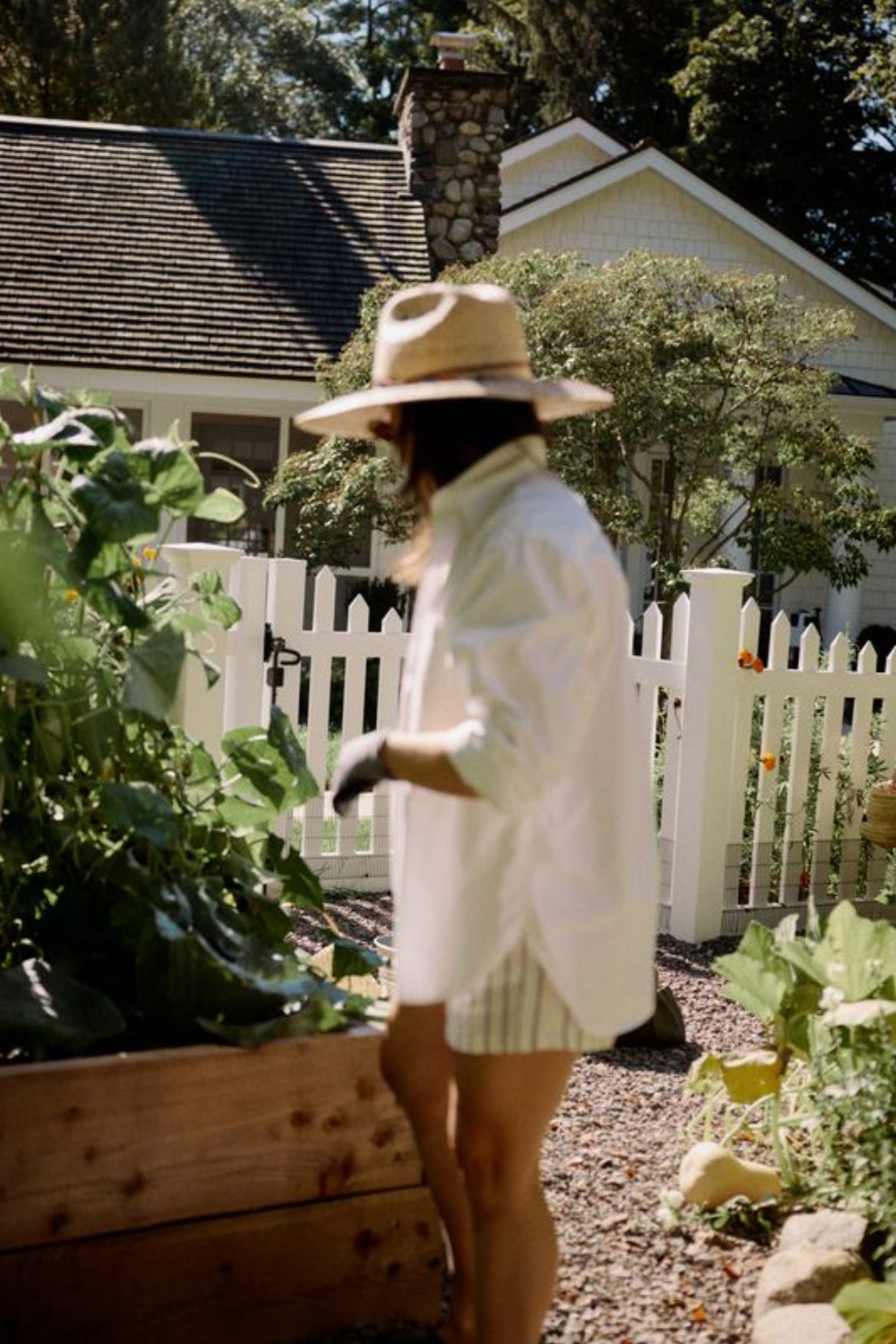
So last summer, I embarked on my first gardening adventure. And true to my nature, I didn’t just dabble, I fully invested. It was frustrating, sweaty, time-consuming, and so very rewarding. I am already dreaming of what I will do next summer. More on my first summer of gardening here.
Their Story
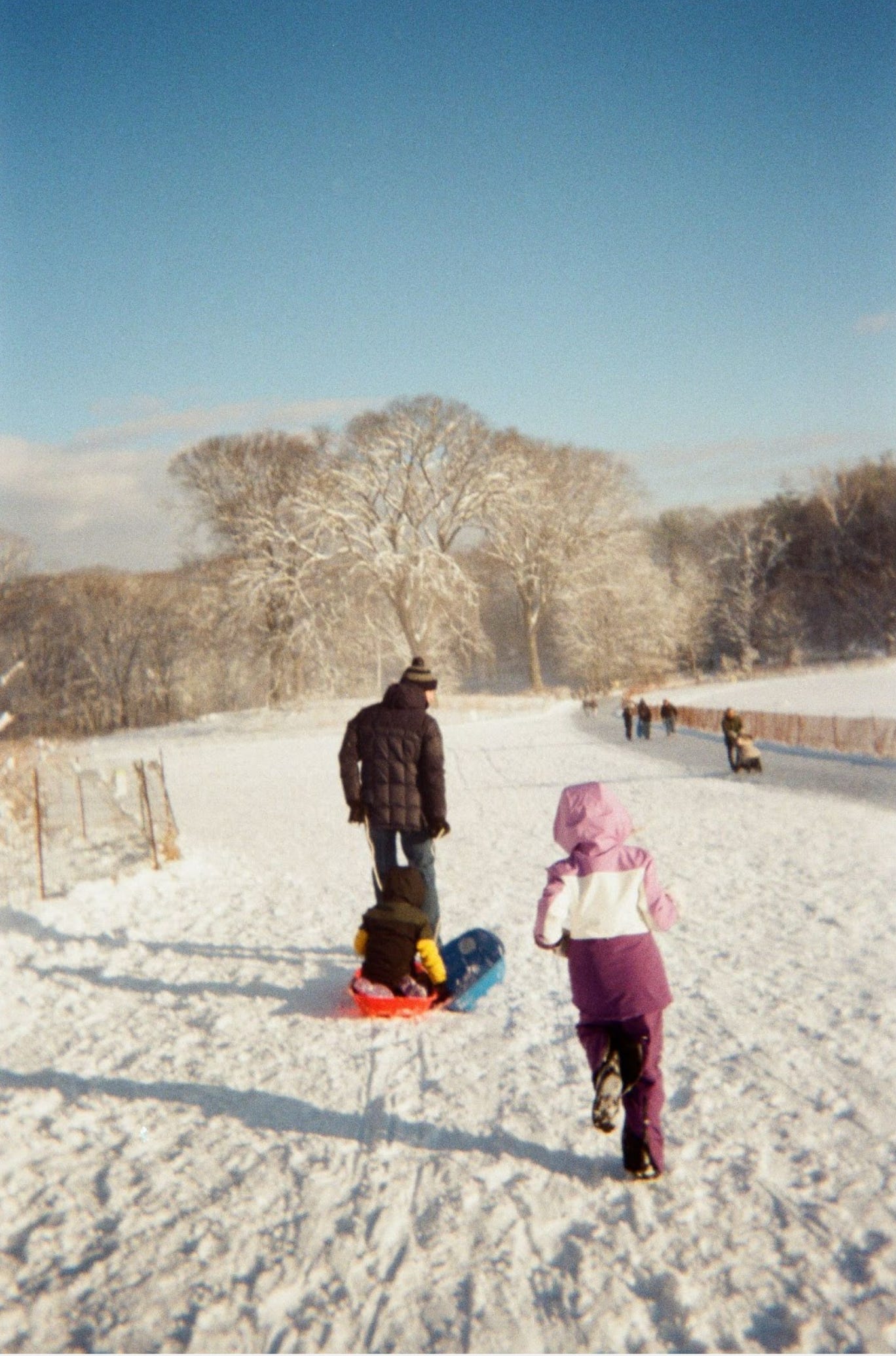
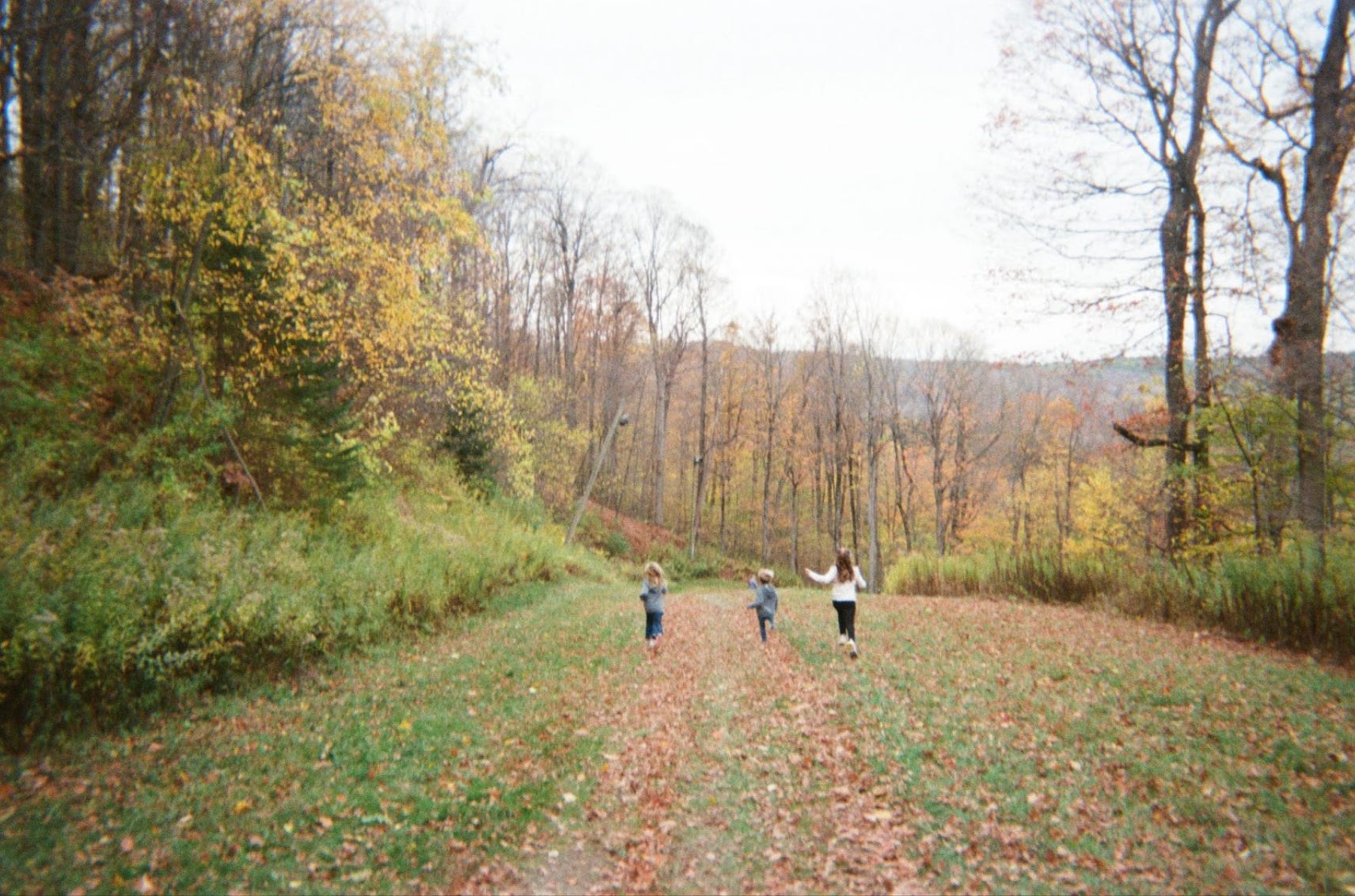
I’ve been thinking a lot about how children will suddenly start running. I watch as my kids take off, my daughter’s blonde hair whipping behind her like liquid gold. My son skips a few times, then bounds after, always trying to keep up. What is it that makes kids run for no reason at all? It is as if their bodies have more excitement than they know what to do with. An excess of joy that needs to be expressed physically. At what point do we stop doing that? When does running become something reserved for exercise? I keep wondering where that line is, the moment we trade joy for purpose. How can I help my kids hold on to that spirit for as long as possible? How can I channel that for myself?
Thank you, Lauren!
LES Collection studio visit photos by Rachel Schwartzmann.
All other photos courtesy of Lauren Sands unless credited otherwise.

 | A guest post by
|
Thank you so much for having me! This was a joy to work on!
I love a slow story!! It feels like reading an adult picture book with the photos paired with each story! What a great way to start my Sunday!