

Stacey Yu
Discover life chapters and slow stories from the author of KITTEN.


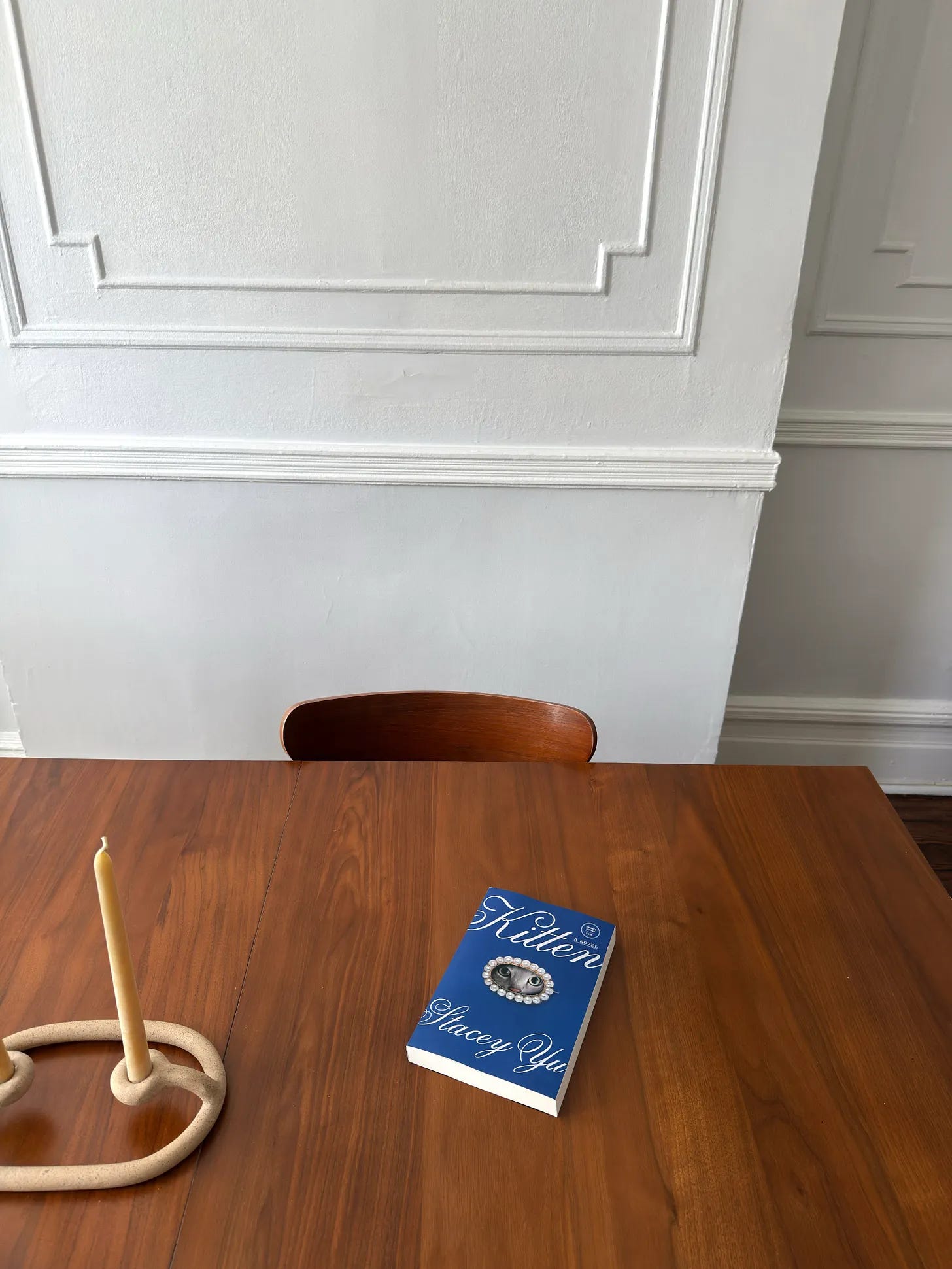
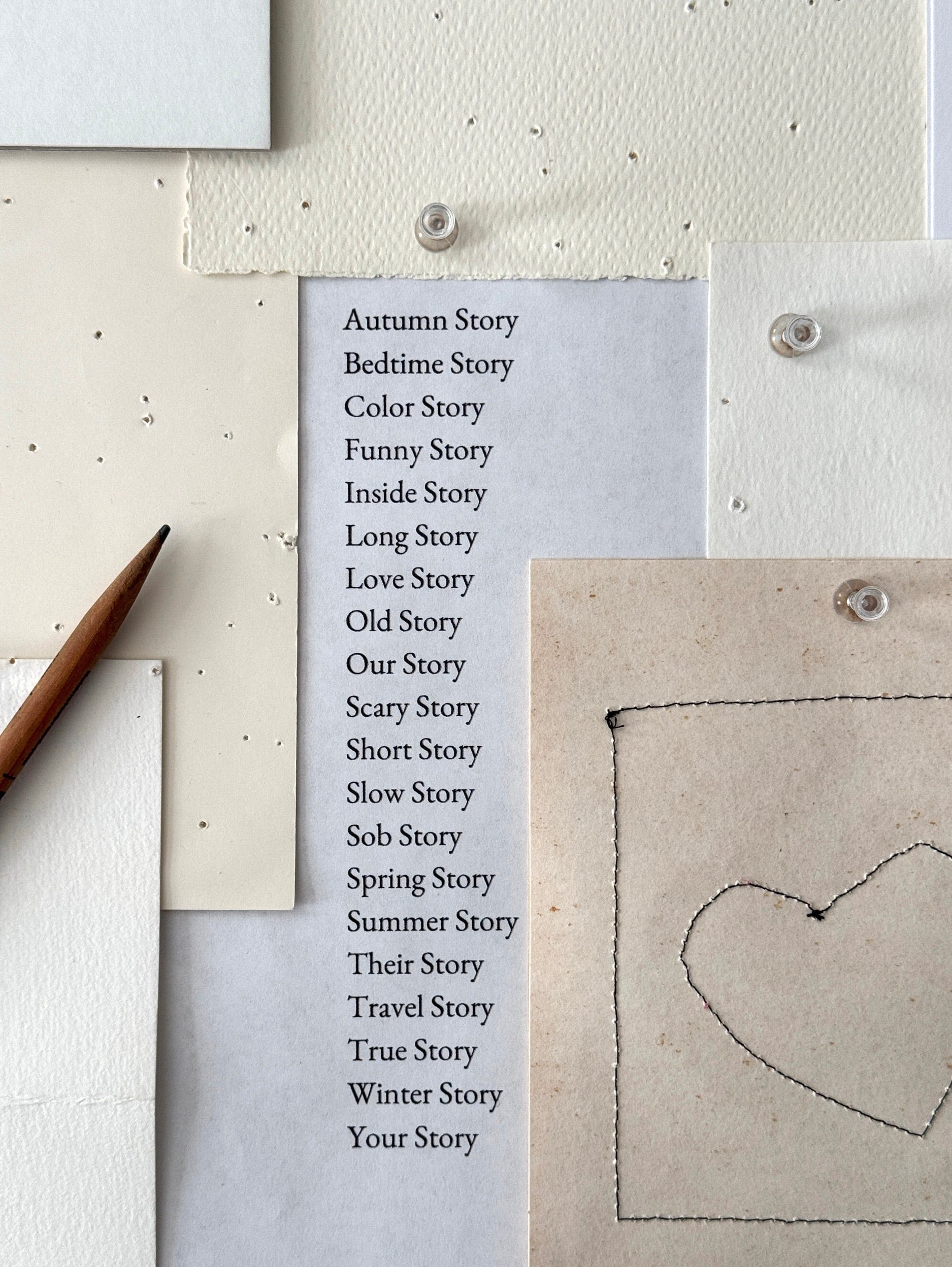
Every (life) chapter has at least one memorable moment, sentence, or story. What are yours? In Chapters, I ask creative people to reflect on the stories of their lives and respond to any of the below prompts (in whatever way they wish).
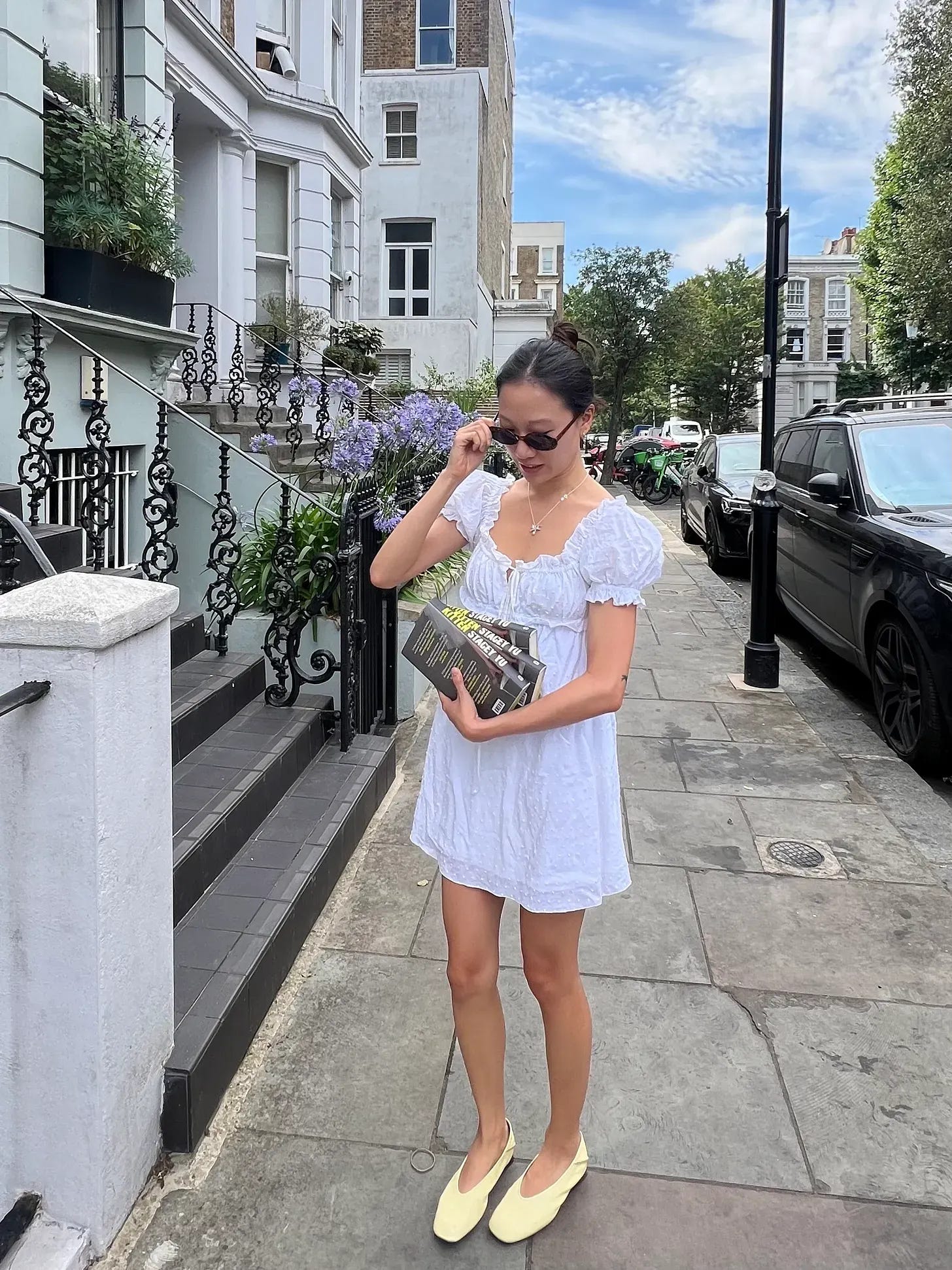
In the latest installment, we hear from Stacey Yu—reader, writer, and author of Kitten (out August 4th from Random House)—who shares literary musings, travel memories, and excerpts from her Substack, Blue Hour.
Slow Story
Summer is for solitude, letting your skin prune, and reading long books. Last summer, I read Possession by A.S. Byatt, and its passages still wash over me when I’m lying bare-limbed on the couch with the blinds drawn and the heat pressing in, or waiting for the train on an empty platform with the sun still holding even past nine at night, or doing anything that I was doing last summer while reading the book, wishing it would never end. Possession is a long, lush, intellectually sumptuous and deeply romantic book about two academics who get entangled when they discover a secret about the poets they’re studying. It has the satisfying itch of a good detective novel—a genre made for summer—and the glimmering prose of a poetry devotee. Much of the book, in fact, is poetry, invented fragments from the Victorian poets at the heart of this academic mystery. I recommend it wholeheartedly for anyone who is looking to get lost in a good book, maybe my favorite kind of romance.
“Think of this—that the writer wrote alone, and the reader read alone, and they were alone with each other.” ― A.S. Byatt, Possession
Winter Story
Earlier this year, in the dreary and lightless fugue that is England in January, I spent a long weekend in the town of Hathersage, where Charlotte Brontë lived for a period of time while writing Jane Eyre. I stayed at The George Inn, a beautiful pub and hotel that gets a mention at the end of the book, though by now it’s far from the spare, unassuming place of its textual description.
I’ve never really been a place person. What I mean by that is I’ve never felt the chemistry or loyalty other people seem to have with certain places, whether that’s a country they visited abroad once or their hometown. Maybe it’s because I moved around a fair bit as a kid. Maybe it’s because the various cities I’ve lived in across the United States are only a couple hundred years old, and constantly changing. Every time I go back to California to see my parents, a new block of housing has sprung up. The apartment complex where I first lived was recently razed down. Unfamiliar shops fold as quickly and discreetly as they popped up.
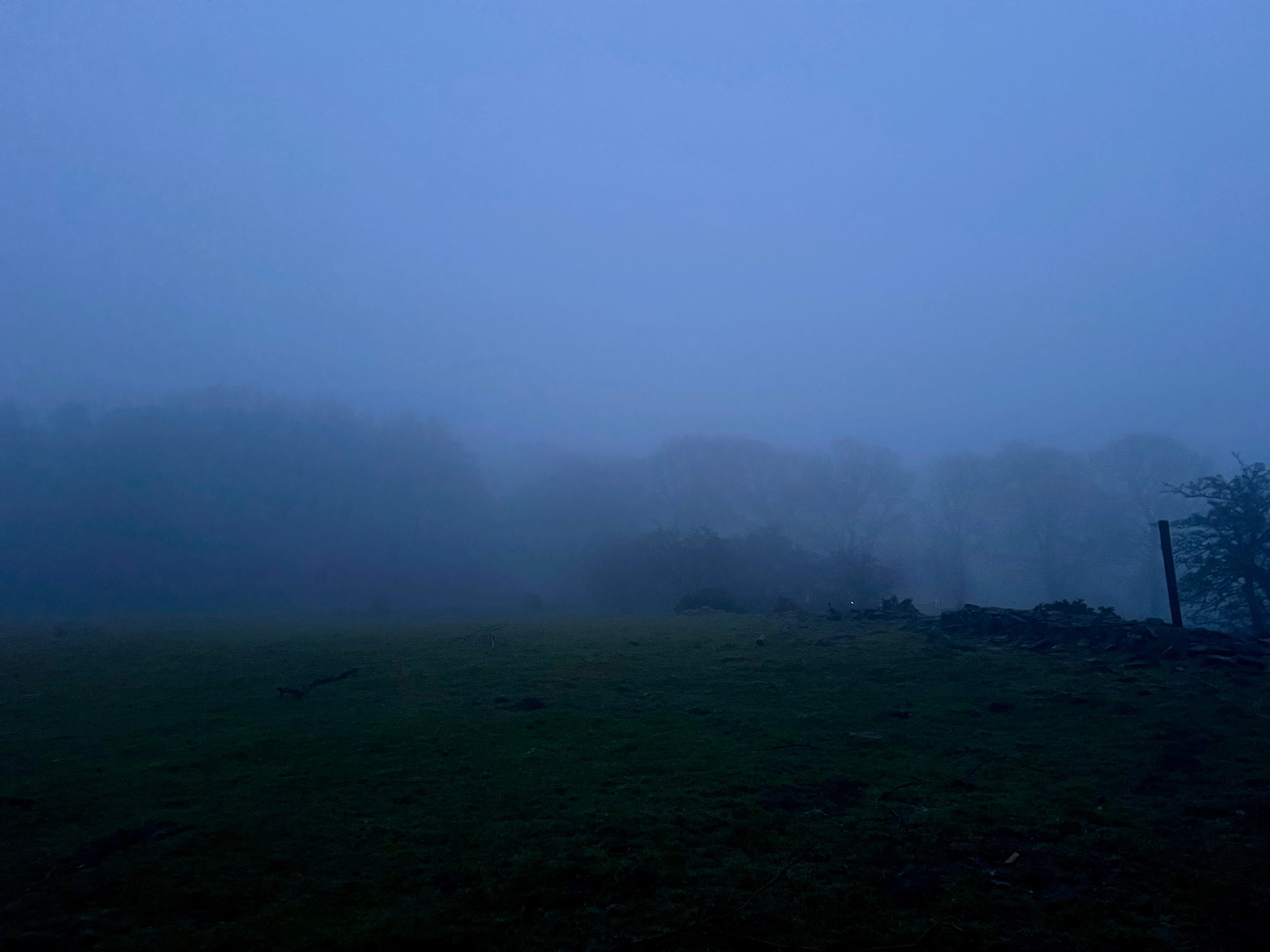
In Hathersage, I felt possessed by its placeness. By the dense white fog. By the curved wet roads. By the tree branches reaching overhead, a mess of veins. And especially by the blue. When I think of January, I think of that Hathersage blue, misty and charged and definitely a little haunted, not by anything bad, maybe simply by time. It’s a silly thought, but I felt certain this blue was the same blue of Brontë’s evenings many, many years before. In fact, I saw everything, the shape of the hills and walls of rock, as something she might have seen. Unlike the many shopping complexes and parking lots I’ve outlasted, these bits of nature have always remained and will continue to remain still.
Jane Eyre is a book of deep elemental power and an almost divine sense of placeness. Reading it, I came upon many unfamiliar words for types of weather, times of day, trees, birds, flowers. I felt my lack of fluency with the natural world acutely; it lent such descriptions an air of mysticism, like I was walking through a museum full of well-preserved artifacts. I’m sure that for people from the North, such passages land with beautiful familiarity. On my walks in Hathersage, I felt I was always going somewhere, even when I didn’t have a destination in mind. The place was the place; there was a there, there. I want to go back, but I feel I probably won’t. Experiences this striking are best experienced once.
Color Story
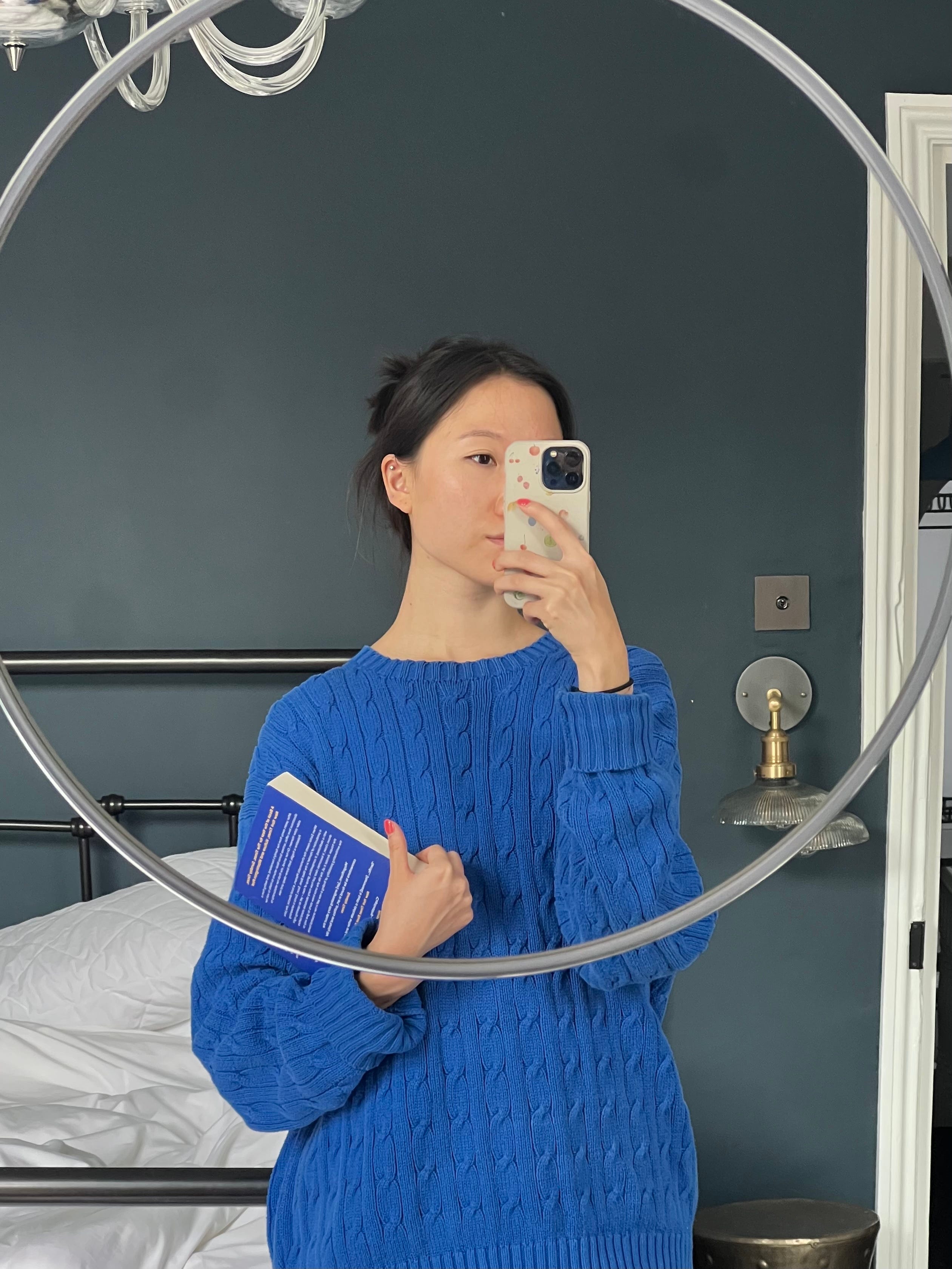
Bluets by Maggie Nelson found me at exactly the right time. Twenty years old in New York City, feeling all wrong inside, romantic to the point of delusion. It was like a shock and a balm, a mosaic of feeling, attitudes, and experiences that I couldn’t fully relate to yet resonated with all the same. Bluets defies classification. I’ve seen it described as a collection of prose poems or a lyric essay, but those don’t feel quite right to me. Easier to zoom out and examine the book’s subject, rather than its form, though that proves difficult, too: a meditation on love and grief; a literary conversation with different artists and painters; a treatise on the color blue.
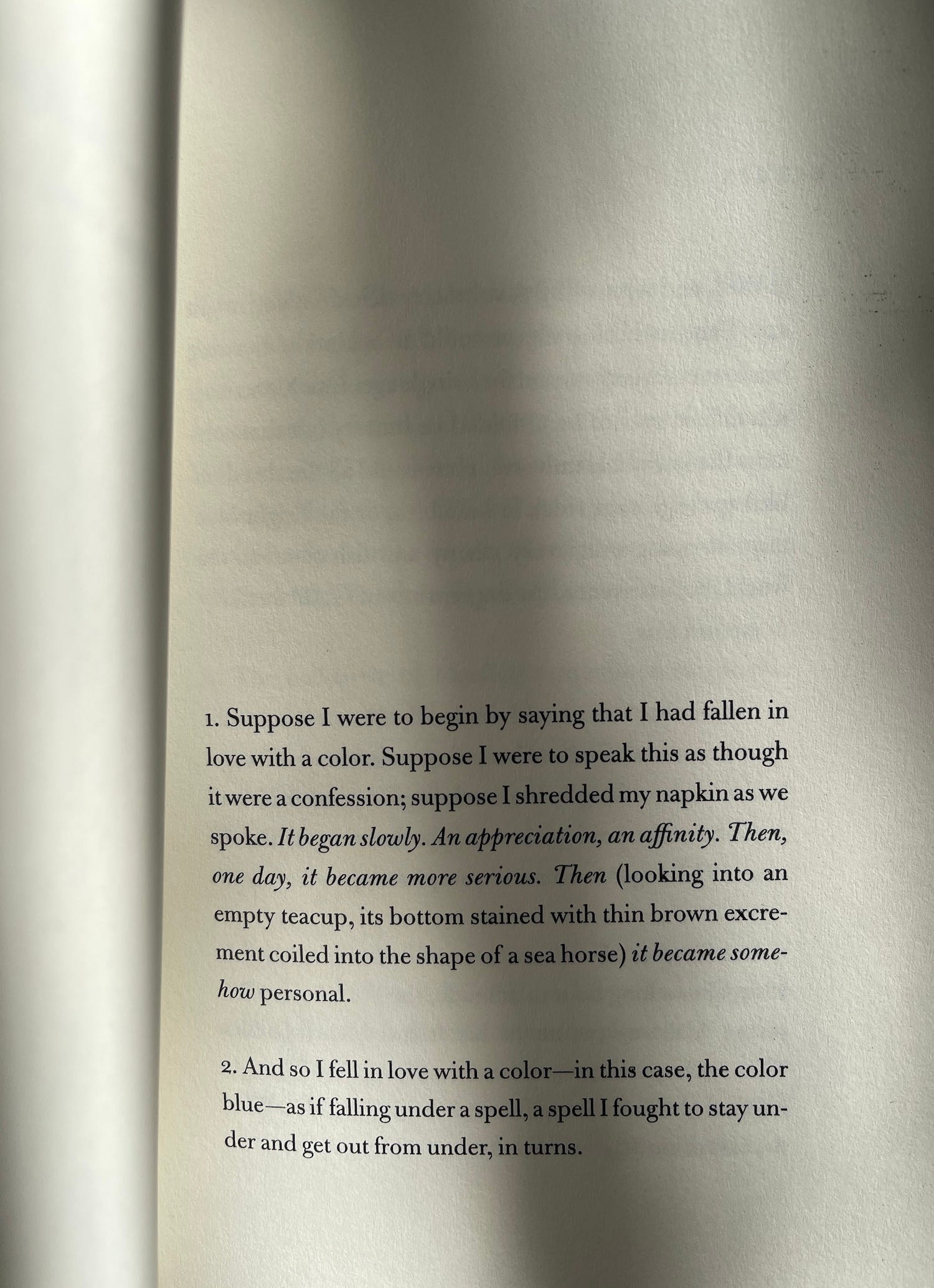
I love blue. At this point I can’t tell how much Bluets influenced my love of blue, a love which existed before it, but has certainly gained depth since. I love how tacking ‘blue’ onto any other word transforms that word entirely, giving it an other-worldly and liminal significance: the Blue Period. Blue Weekend, one of my favorite albums. Blue hour… my favorite time of day, and the name of my newsletter.
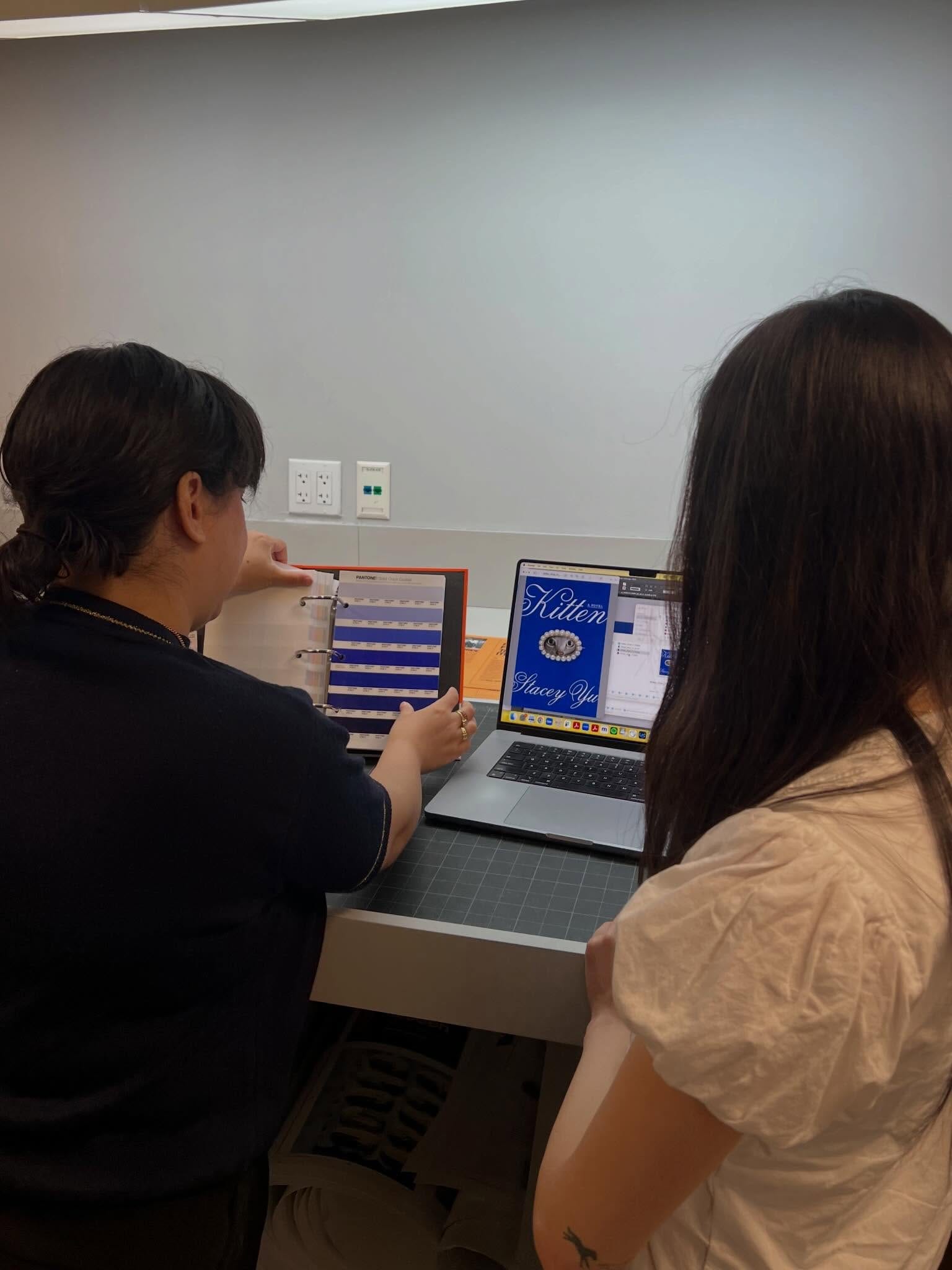
“We love to contemplate blue, not because it advances to us, but because it draws us after it.” —Goethe
Summer Story
Excerpted from my piece “I Went to New York and All I Got Was This Lousy Confrontation With Past Desire”
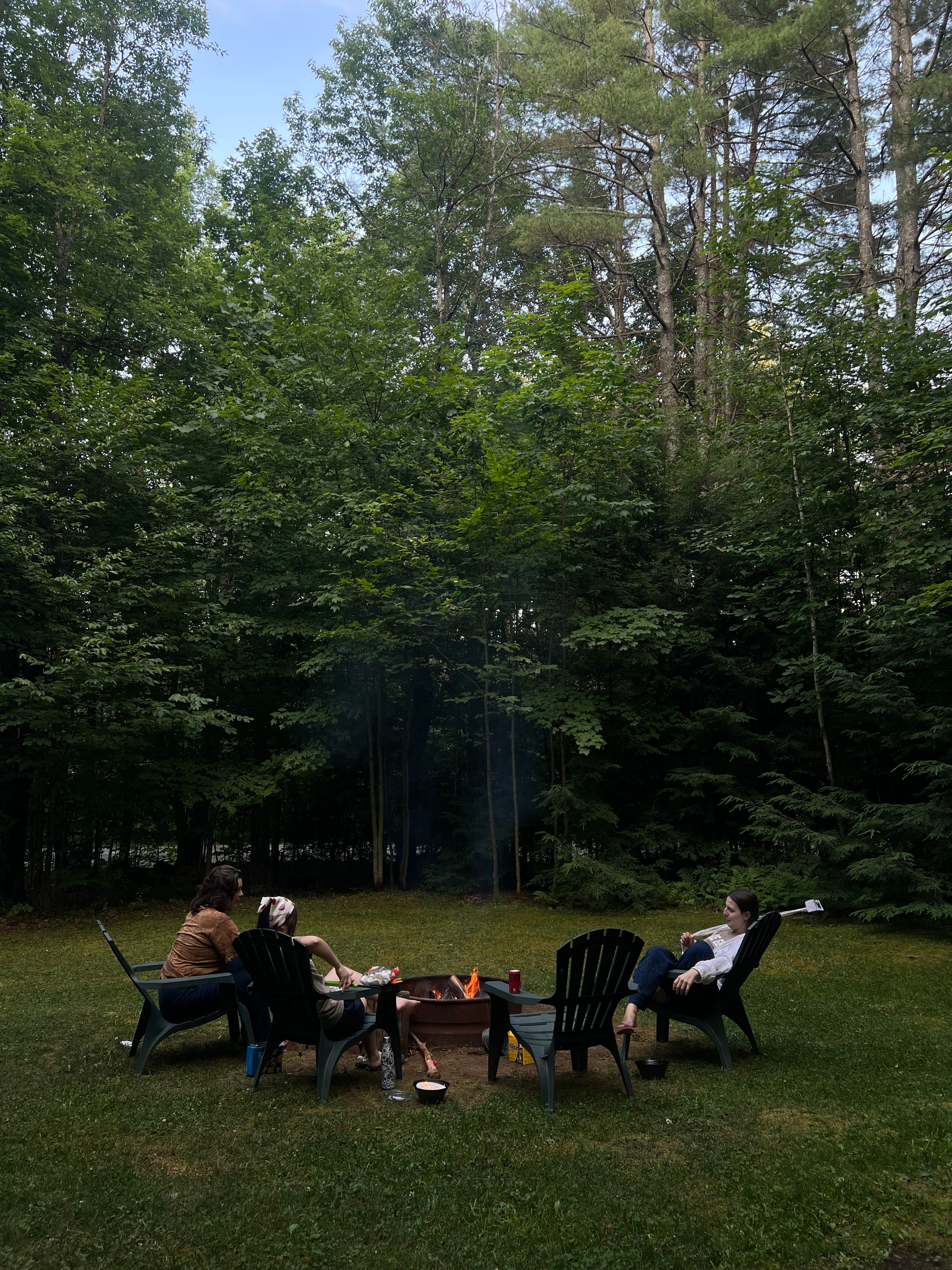
Since our Covid make-up graduation in 2022, three of my friends and I meet each summer for a group trip. [Last] year, we reunited in New York, for a few days upstate in the Adirondacks.
The first thing I noticed about being upstate was the amount of American flags. I had that weird feeling, a mix of detachment and guilt and recognition, that you occasionally get when you’re an American who lives abroad. On the way back from the grocery store we drove past a banner of Trump. Then we drove past a sign that said, delightfully, Caution: Chickens at play. Trees flanked us on both sides. When we turned up the hill that led to our secluded Airbnb cabin, it started to rain, though it was still light out, so the water that passed through the leaves was fine and bright and backlit by the sun. We all cried out at the beauty.
Reunion is a loaded thing. The fact of having chosen to do it is already a signal to each other, and to time, that our togetherness means something. There are expectations, narratives. There are backlogs of things to discuss. Some of us were already familiar with the recent stuff of each other’s lives, but we hadn’t yet discussed the stuff together, which was crucial. On the agenda, day after day: swimming, roasting marshmallows, but most importantly, and through it all, talking. We talked and talked and talked. Job qualms. Break-ups. Relatives passing. The normal beats of an adult life, pulling from each of us different perspectives and emotions, so that in the end we arrived at a new sense of what was and had been happening to ourselves; we arrived at a better sense of each other. I was open about things I kept close to my chest years ago. Even though we’ve been friends for nearly ten years, every time we see each other, we learn to talk to each other better.
I’m reminded of a line in the dystopian novel I Who Have Never Known Men by Jacqueline Harpman, about the self-sustaining community the stranded women are able to form when they start to share their thoughts with each other: “Talking is existing.” Sharing who we are, what we think, over and over again: we exist. And though we exist on separate sides of the Atlantic, we still make the choice to exist together.
One of the things we discussed was the idea of missing a version of your life that you could’ve had but didn’t choose. It became clear to me this was what my fear was all about. Emilia and I were chatting outside on the deck. There were a lot of flies, so we doused the chairs in bug spray, coughing through the fumes. But once we settled, it was beautiful, the thicket of trees hanging over us dark against the sky and occasionally glimmering with fireflies. After graduation, both of us ended up leaving the city for good (at least, for now), while Ari and Daniela made their ways back. “It’s weird,” she said. “For the first time, I have this sense of loss about New York.” It didn’t even have anything to do with Covid, she said, those years of our twenties gone. The loss was over something less concrete, just an idea, really, of what could’ve happened had she not chosen to go to grad school in Oxford.
I understood what she was saying. Up until recently I hadn’t made my life change in any significant way. Covid forced me out of New York, and then my job required me to move to San Francisco. These moves felt pre-determined, like they had to happen. But when I chose, two and a half years ago, to close the gap of my long-distance relationship and move to London, I wasn’t following a pre-determined direction, I made my own. My life forked. I could always go back to America, but that wouldn’t undo the fork, it would just make a new one. This fork was the reason that instead of finding New York nostalgic and familiar when I visited, I found it hostile and intimidating. I had taken it away from myself. Would it, and all the versions of me determined to make it my home, ever let me forget that?
I thought back to the start of quarantine, when Emilia was still deciding whether or not to accept her Oxford offer. I thought further back to that summer in 2019, where none of us had a single real decision to make. There wasn’t a question we would’ve asked then that we could not answer now. We were old enough now to have experienced our own decisions.
Ari and Daniela came to fetch us because we’d been out there for ages. We told them our revelation. They just looked at us, like, it took you this long to realize? They were always better at coming to terms with things.
Travel Story
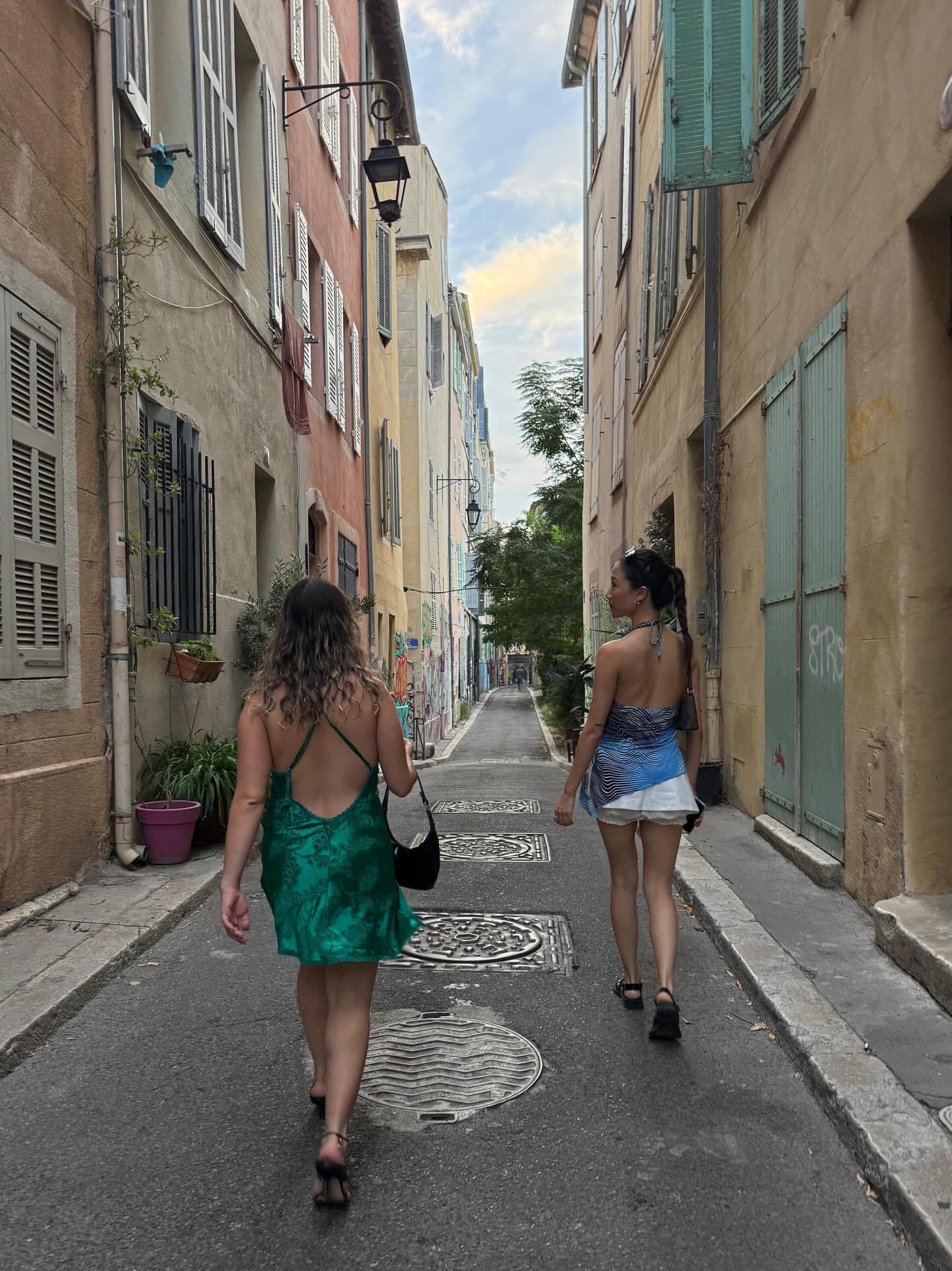
One of my most memorable trips started the way you never want travel to start: with a cancelled flight. My friends and I had been planning on going to Bilbao, but when we showed up at the airport, we learned that strikes in Spain meant no flights were going for the whole weekend. We were able to get a refund easily for our Airbnb, but were loath to simply return home with our bags. My friends were visiting London from New York, and we were really looking forward to traveling together before they had to return.
So… we looked at the list of departures planned that day, found a round trip ticket for Amsterdam for less than $100, and were on our way to a completely different country, woefully underpacked for the weather. Luckily my boyfriend had a good friend in Amsterdam, and she was so kind as to host us for a couple nights.
Because the trip was completely unplanned, everything we did carried a frisson of excitement and chaos. We caught the end of a truly spectacular Nan Goldin exhibit at the Stedelijk. We went to a punk-themed bar with another old friend of my boyfriend, someone he hadn’t spoken to since they were teenagers. I forked from the group to make a separate pilgrimage to the Miffy Store. Just passing through the streets in the evening felt a bit magical, though it helps that Amsterdam is one of the most beautiful and walkable cities in Europe.
On our last night, we befriended a few locals at a jazz bar. One of them worked in a pottery studio, and he took us there when the bar closed. It was 3 am. I learned to throw my very first pot. We left our pots on the curb outside to avoid raising any suspicions with the owners the next day. The morning after, we caught our flight home. I don’t know what ever happened to those poor pots, but the guy texted afterwards saying that he was fired for leaving the heating on overnight and racking up a horrifying bill.
Old Story
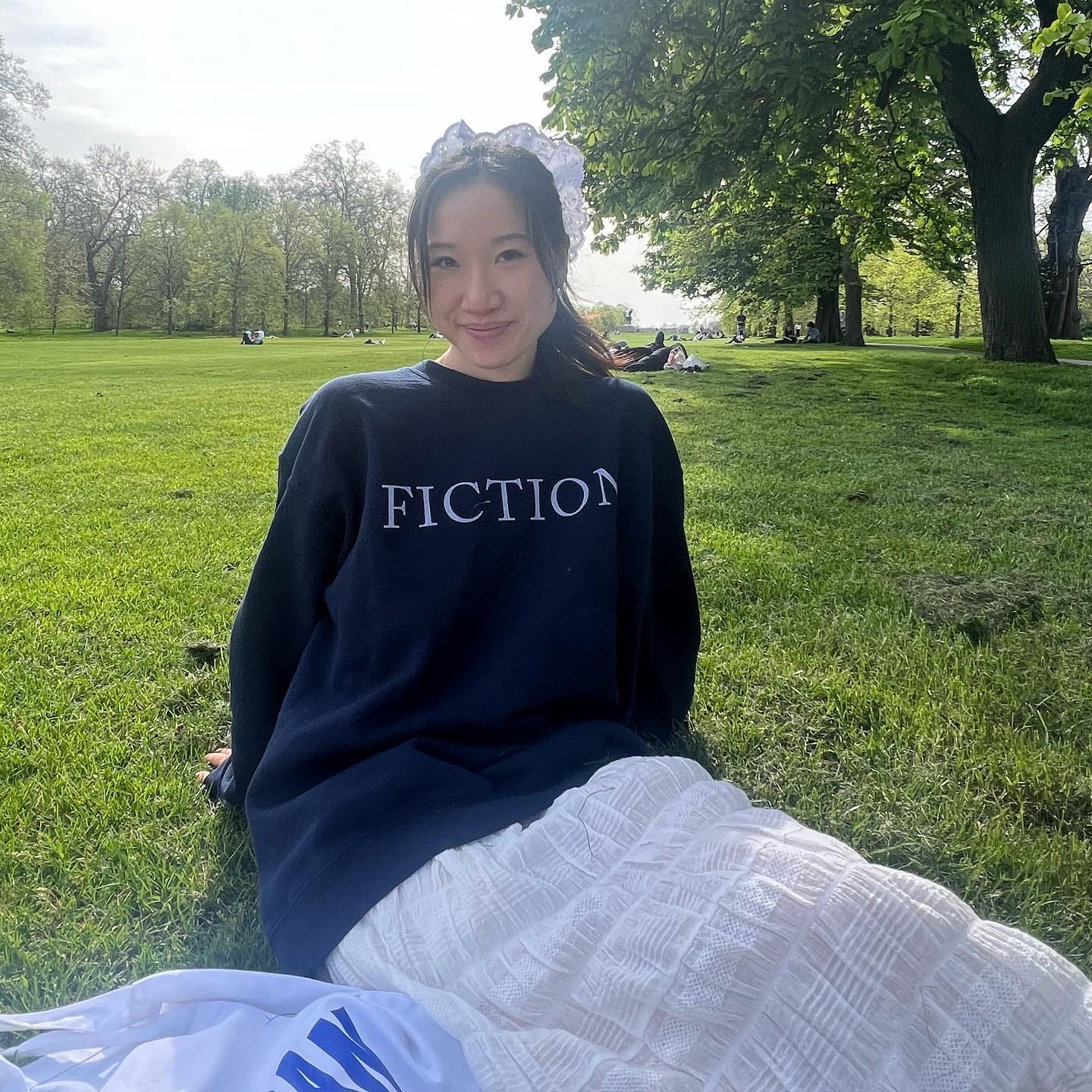
Romeo and Juliet is my favorite Shakespeare play—and old story. Its ubiquity in popular culture makes it seem trite, so people often think I’m kidding when I defend its genius. But at fifteen I wrote an op-ed for my high school paper in defense of the play, sick of my classmates disparaging its ‘unrealistic romance’ (Really? Who among us has not fallen willing prey to an all-consuming crush?), and at 28, with a few more Shakespeare classes and theatre viewings in my belt, I’m always ready to do it again. What makes Romeo and Juliet good is not its central romance, but its clarity of perspective on the origins of violence and its sustainment through the web of society—and what it takes for a person or people to realize a different life (the answer: they can’t, at least not while still contained within that society). It’s as much an offering of hope as it is a warning for our times.
Are Romeo and Juliet in love? I don’t care. I mean, I think they are, but I care more about the bigger desire beneath their desire for each other. To me, it is a desire, urgent and totalizing, to escape.
Their fictional town of Verona is a small one in every sense, physically cramped and economically controlled by select mercantile forces (much like London at the time). Before the Beckams existed, the Montagues and Capulets, the town’s most powerful merchant families, were mixing family and business to catastrophic results. Romeo and Juliet understand the economic forces behind family and marriage implicitly: even in love, Romeo sees Juliet in terms of market value—he compares her to a jewel on Ethiopia’s ear—while Juliet resents being arranged to wed for her family’s political benefit. In this extremely rigid and patriarchal society, we have two teenagers who have yet to be confined to the roles of their mothers and fathers, desperate to escape their parents’ fate. But the window to do so is small, because Juliet will marry soon. That they fall in love quickly and recklessly is testament to the stakes of their situation; their romance is a critical rebellion. They’re naive, but brave. They believe a different world is possible.
I haven’t even mentioned that the insane rivalry between the families is completely, utterly meaningless!! I love that their beef is rooted in nothing, because it highlights the fallibility and stupidity of people. When modern interpretations introduce a reason for the rivalry, I roll my eyes. Let the pathetic, tragic figures remain pathetic and tragic, please.
The only character who believes in Romeo and Juliet’s escape fantasy is the priest, a strange, witchy character who makes magical potions and often goes on long journeys outside Verona. It’s important to Shakespeare’s vision of fate and destiny that only the priest knows a life outside Verona. Even Romeo, when faced with the threat of exile, calls it a fate worse than death, saying that “there is nothing but Verona.” The priest understands and represents the possibility of a different life, helping them concoct a plan to defy their parents.
Ultimately, of course, the plan fails. Romeo and Juliet can’t escape the familial, societal, and economic structures that encase them. Try as they do to imagine a future different from their families, they can’t imagine a future outside Verona, so they are condemned to live, and die, inside it.
Does free will exist? Is fate not just the rules of society? What does it take to do things differently from how they were always done? Is it worth the effort? These are the questions at the heart of Romeo and Juliet. As an adult, I’ve realized I have a special love for social novels and tragedies, and can understand more clearly my teenage chemistry with the play. It’s an old story, it’s in many ways a true story, and also, I’ve yet to feel anything like when I first watched the fishbowl scene between Claire Danes and Leonardo DiCaprio.
Love Story
Excerpt from my piece “Reflections on love from a disappointed romantic”
I’m a romantic. I can’t help it, I was born on Valentine’s day. I crush easily, move on even easier. My carpool buddy from the fourth grade, the person opposite me on the tube wearing beat-up shoes, they strike me the same childish way, I am impressed—a little bit enamored—I want them to love me. And then the door opens and cold air slips over my face and a new song starts playing and I forget about them, I love being just me.
I didn’t expect to fall in love so early in my twenties. Despite my love of love, I seriously believed that romantic love wasn’t for me. This was a simple probability assessment. Everybody who’s in love talks about luck, the unplanned magic of right person, right time. The universe is big. Why should I, I thought, be the lucky one? Also, my feelings for my high school exes were never serious. I believed myself emotionally reticent and shy, too selfish to commit wholeheartedly. Devout as I was to the ideology of romance, I was non-practicing.
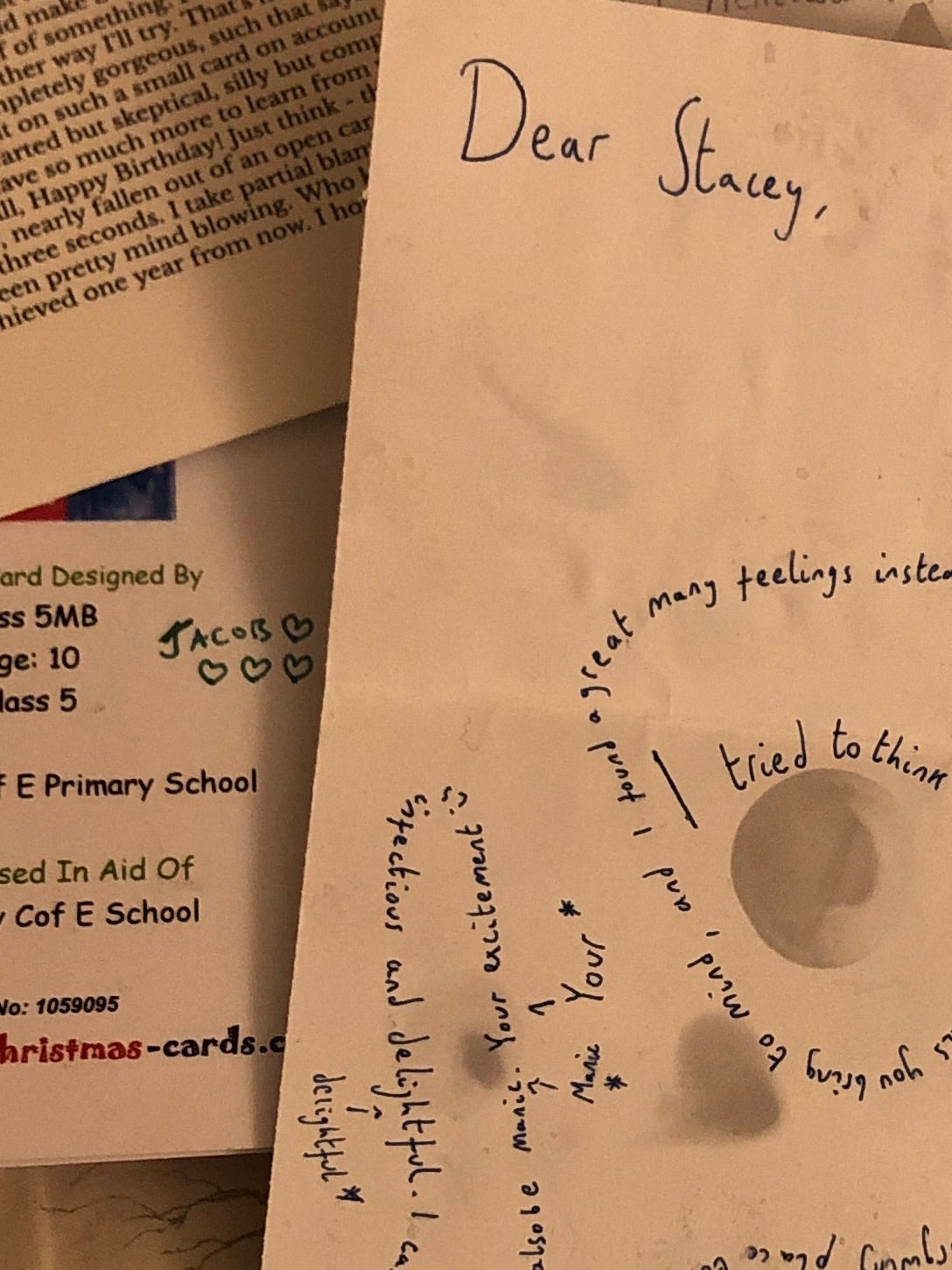
But then I met Jacob. He was the friend of a friend in Paris. I told him “I love you” the second time we met. Are you cringing? Don’t worry, I was very drunk, and I forgot I did it until he brought it up a few weeks later. He was at once the stranger in beat-up shoes and my fourth-grade carpool buddy and none of my exes and all the people in the world. He was the best conversation I ever had.
I flew back to America the next day, he to London a few weeks later. I will spare you the details of the truly crazed feelings that possessed me afterwards except to say that I was certain I’d met somebody who would be special to me, and I didn’t know how to make the universe see it, how to get us to be together. I cried a lot. I went upstate. I wrote bad poetry.
It’s been nearly six years since then, five since we started dating, one and a half since I moved to London to close our long-distance gap. Still, I look back on that fervent and wine-laced coup de foudre and see it, above everything, as an experience of truth. The certainty of feeling, the clarity of confession, all of it was true to me, I knew it, I just had to get the other person to see it, to get him to show his hand. I had faith that everything else would easily and logically follow, to little consequence, whether that was a breakup (impossible to fathom, even before we started dating) or a shared life.
I was naive—visas are complicated, moving countries is difficult, and everything has consequences. But I wasn’t wrong.
Thank you, Stacey!
Photos courtesy of Stacey Yu unless otherwise noted.

 | A guest post by
|
thank you for having me on here rachel!!! i love your slow project <3
Oh this was such a delight to read!! So many thoughtful reading experiences 🩷